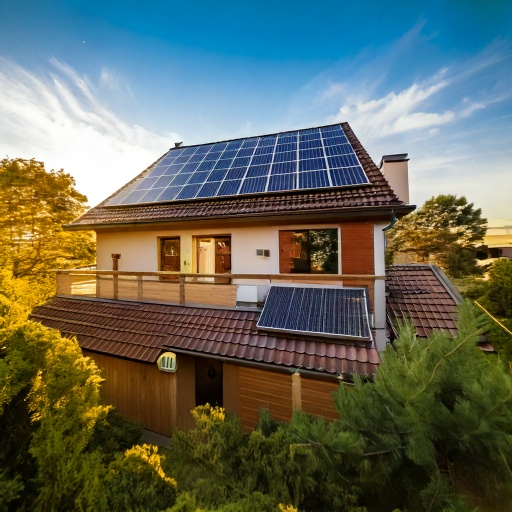
Residential solar is built on “self-consumption”, using the electricity generated during the day on the spot, but how the surplus that cannot be used during the day is handled is what separates the operating modes.
| Item | Grid-tied (no ESS) | ESS-coupled |
|---|---|---|
| Surplus handling | Exported back to the KEPCO grid (net metering) | Stored in the battery for use at night or during outages |
| Outage response | Solar also stops during an outage (safety rules) | Can serve as emergency power if it has stand-alone operation |
| Upfront cost | Relatively low | Higher due to added battery and PCS |
| Bill savings | Limited to daytime consumption | Stored energy also used at night, larger savings |
Takeaway: the difference between the two modes is not how much the panels generate but whether surplus is left to the grid or kept in the house. The starting point for the choice is not panel capacity but which way power flows at the service connection, and how much.
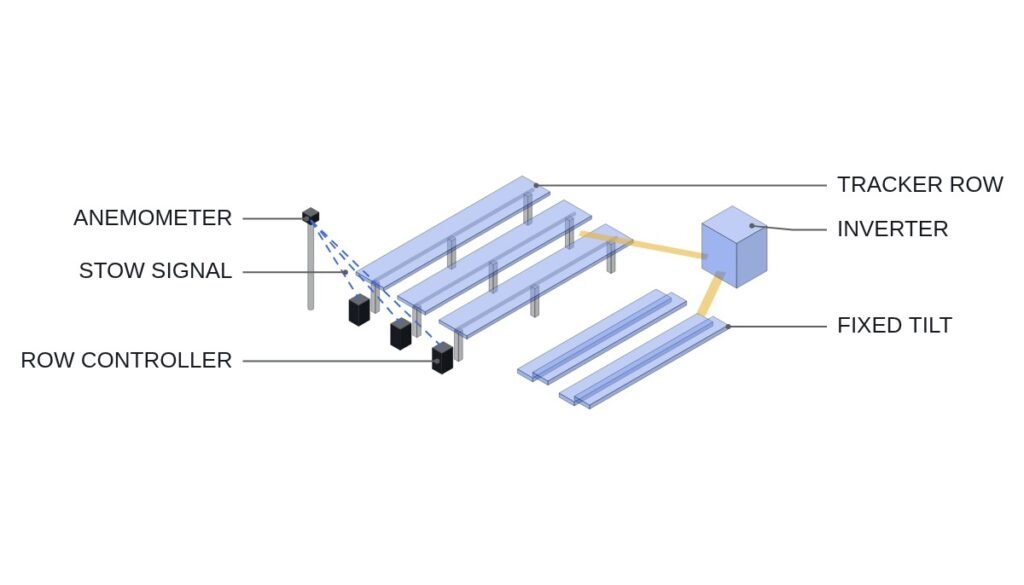
Why grid-tied solar shuts off during an outage — If solar feeds power back into a grid that is being repaired after an outage, it can lead to accidents such as electric shock to line workers, so grid-tied inverters are designed to stop generating automatically when they detect an outage. Pairing an ESS with a stand-alone (transfer) function gets around this limitation and allows the system to be used as emergency power.
What actually changes at the connection point
Seen from the distribution panel rather than the rooftop, the difference between the two modes comes down to what happens at a single point: where the house connects to the grid. In a grid-tied system without ESS, that point carries power in both directions. Daytime surplus flows out, evening and night demand flows in, and the grid acts as the storage the house does not have.
Adding an ESS moves part of that storage function inside the house. The battery absorbs surplus that would otherwise be exported and releases it later, so less energy crosses the connection point in either direction. The economic value of that shift depends entirely on the difference between what exported energy is worth and what imported energy costs. Where exporting and importing are valued close to each other, the battery mostly moves energy around without adding much. Where imported energy costs clearly more than exported energy earns, the battery captures that gap every day it cycles.
The outage behavior is a separate question, and it is where the two modes differ most in hardware. Anti-islanding, the automatic shutdown described above, is a mandatory safety function of any grid-tied inverter; test procedures for it are defined in standards such as IEC 62116. An ESS alone does not change this. To keep supplying the house during an outage, the system must first physically separate the house from the grid, then restart as a stand-alone source feeding only the house. That requires a transfer device and a defined set of backed-up circuits, not just a battery.
Three configurations, compared by character
In practice, “ESS-coupled” covers two quite different builds. The table below separates them, without cost or capacity figures, so the functional differences are visible.
| Item | Grid-tied only | ESS, no backup | ESS with transfer |
|---|---|---|---|
| Night use of solar energy | No (via grid only) | Yes | Yes |
| Supply during outage | No | No (shuts down with grid) | Yes, to backed-up circuits |
| Extra hardware | None | Battery, PCS | Battery, PCS, transfer device |
| Design complexity | Low | Moderate | High (load separation, interlock) |
| Main value | Daytime bill reduction | Bill reduction, night use | Bill reduction plus resilience |
The takeaway from this table is that emergency power is not a property of the battery but of the transfer arrangement. An ESS installed without a transfer device behaves like a grid-tied system during an outage and goes dark with everything else. Anyone buying an ESS mainly for outage protection needs to confirm the transfer function and the backed-up circuit list before comparing battery sizes.
Judgment order before adding an ESS
- Look at the household load profile — how much of the daily consumption happens after sunset. If most use is already during daylight hours, self-consumption is high without a battery and the ESS has little surplus to shift.
- Compare export value and import cost — under the applicable net metering or tariff terms, check how much a kWh exported is worth against a kWh bought at night. The wider this gap, the stronger the case for storage.
- Decide whether resilience is a goal — if outage supply matters, the specification must include stand-alone operation and a transfer device, and the circuits to be backed up must be chosen up front.
- Check the installation constraints — space, ventilation and access for the battery and PCS, and whether the existing inverter can be coupled with the ESS or must be replaced.
- Check maintenance and replacement — the battery will age faster than the solar modules; confirm the warranty terms and who services the system over its life.
Step 3 is the one most often skipped. Many systems are sold as “backup-ready” and installed without the transfer arrangement, and the owner only discovers the difference during the first outage.
Boundary conditions
The ESS-coupled mode comes out ahead when a large share of household consumption falls outside daylight hours, when imported energy costs clearly more than exported energy earns, or when outage supply is a real requirement and the transfer function is included in the build.
The judgment flips when the household already consumes most of its solar output during the day, when net metering values exported and imported energy nearly equally, or when outages are rare and short enough that resilience has little practical value. In those conditions, the grid is already acting as a cheap and reliable battery, and a physical one adds cost and maintenance without changing much.
The single selection criterion: add an ESS when the gap between export value and import cost, or the need for outage supply with a proper transfer device, is large enough to justify it; otherwise, grid-tied solar alone is the rational choice.