Conclusion. In the second round of the AI distribution-grid energy storage system (ESS) call for proposals that the Ministry of Climate, Energy and Environment and the Korea Energy Agency are running this month (covering about 50 distribution lines on the mainland and 7 on Jeju), a de facto quota under which 2–3 of Jeju’s 7 candidate lines would be awarded first to non-lithium next-generation batteries is being seriously considered. For the mainland lines as well, a plan to give extra points to bidders applying non-lithium technology is under review. Judged only by initial capital cost and energy density, lithium-ion batteries remain the de facto standard for distribution-grid ESS, but where fire safety, long-duration discharge and the characteristics of Jeju’s grid — where a high renewable share makes curtailment frequent — overlap, non-lithium batteries (vanadium-ion and others) gain the advantage.
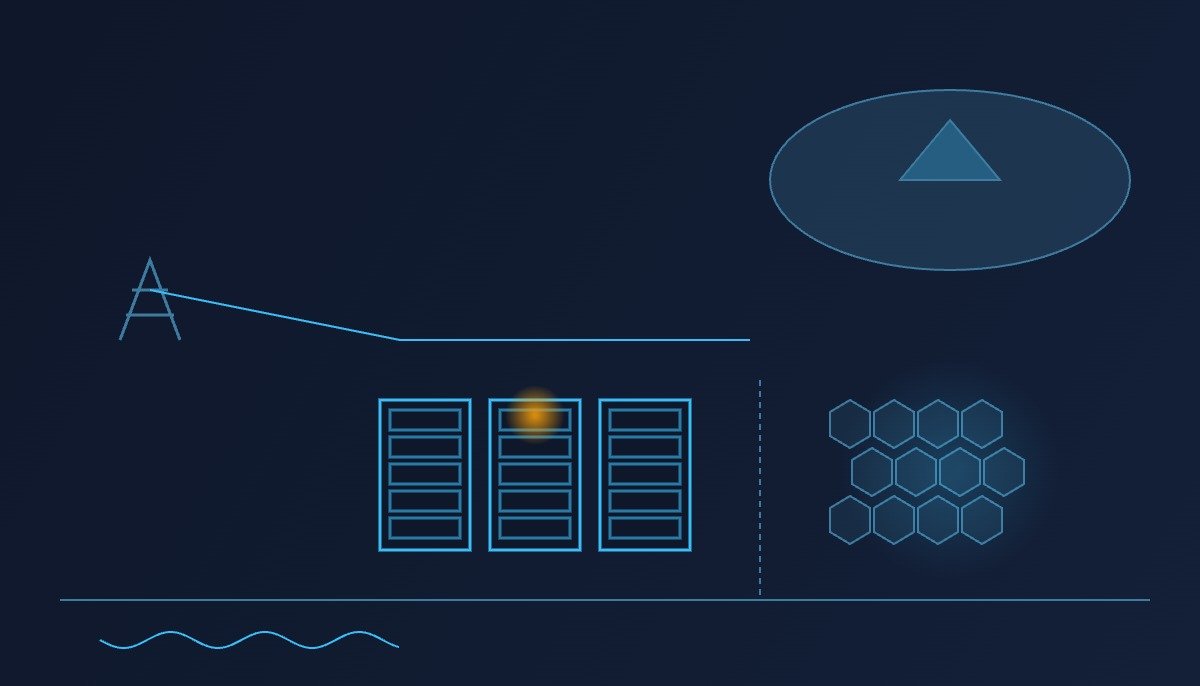
Lithium-ion’s initial capital cost advantage is not absolute against the risk premium of fire and long-duration requirements. The denser the urban setting and the more frequent the renewable curtailment on a grid, the narrower that advantage becomes, or the more likely it is to flip.
Fire safety and long duration, not speed — where lithium-ion and non-lithium win or lose
According to a September 5, 2026 report by the Electric Times (Jeonki Sinmun), the Korea Energy Agency will run the second-round AI distribution-grid ESS call this month, covering about 50 distribution lines on the mainland and 7 on Jeju. The industry expects the Ministry of Climate, Energy and Environment to award 2–3 of Jeju’s 7 candidate lines first to non-lithium next-generation batteries, and a plan to give extra points to non-lithium bidders in the mainland call is also considered likely.
This stance is interpreted as a result of seeking to eliminate the thermal-runaway fire risk of lithium-ion batteries at the source and of considering the characteristics of Jeju’s grid, where a high share of renewable generation makes curtailment frequent. In Korea, vanadium flow battery company H2 and vanadium-ion battery (VIB) developer Standard Energy are named as beneficiaries of this stance. Separately from the second-round program, the government is also considering a dedicated next-generation battery support program targeting Jeju next year.
| Item | Lithium-ion ESS | Non-lithium (vanadium-based) ESS |
|---|---|---|
| Energy density | High (more kWh can be installed on the same site) | Relatively low (more installation area needed for the same kWh) |
| Fire safety | Thermal runaway risk ever-present; heavy burden on suppression and interlock design | Industry describes ignition risk as virtually nil (non-flammable due to electrolyte properties) |
| Cycle life, long duration | Capacity fades after thousands of cycles; constraints on long-duration discharge | Known to favor decades-class long life and long-duration discharge |
| Initial capital cost (KRW/kWh) | Low (economies of scale from mass production) | High (early mass-production stage, no economies of scale yet) |
| Government policy incentives | None (existing standard technology) | Jeju distribution-grid ESS quota and mainland extra points under review |
| Suitable grid | General industrial complexes and open land where fire risk is acceptable | Dense urban areas, grids with frequent renewable curtailment (Jeju type) |
What this table says is that the unit-cost advantage and grid suitability are not on the same side. Lithium-ion leads on initial capital cost and energy density, but against Jeju’s grid constraints of fire safety and renewable hosting capacity, non-lithium is assessed as the more favorable option.
The advantaged position that policy creates
Under current conditions, lithium-ion is the de facto standard in the distribution-grid ESS market and is overwhelmingly ahead on initial capital cost and ease of procurement. But if the government introduces a non-lithium quota and extra points, the conditions change — on a grid like Jeju’s, where renewable curtailment is frequent and sensitivity to fire safety is high, non-lithium bidders gain the opportunity to build an early demonstration and commercialization track record through a policy-secured entry route. The logic connecting this change is clear — the initial capital cost disadvantage is offset by government incentives (quota and extra points), and the advantaged position is created as non-lithium’s strengths in fire safety and long duration match the actual needs of Jeju’s grid.
Boundary conditions — where the advantage flips
- Non-lithium batteries are still at the early mass-production stage at a small number of companies such as Standard Energy and H2, so if cost and quality verification at volume production falls short, policy incentives alone may not guarantee actual grid reliability.
- The detailed guidelines for the second-round call have been delayed, partly due to recent personnel changes among those in charge, so the quota and extra-point plans may change before they are officially announced.
The single criterion that decides the advantage in this case is the strength of the grid constraint. If fire safety and renewable hosting capacity are the top constraints, as on urban or Jeju-type grids, non-lithium has the edge; if not, as on general industrial complex or open-land grids, lithium-ion’s initial capital cost advantage still prevails.
References
- Electric Times (Jeonki Sinmun), “Government weighs the ‘non-lithium battery’ card for distribution-grid ESS” (2026-09-05, 07:00, issue 4577, page 1, in Korean)
- Electric Times (Jeonki Sinmun), “Standard Energy and Elice Group to innovate AI power infrastructure with ‘VIB + modular data center'” (2026-05-07, background reference, in Korean)
- US9419279B2, Tohoku University (current assignee MK Plus Co., Ltd.), “Vanadium battery” — priority date 2009-10-20, granted 2016-08-16, legal status Active per Google Patents lookup, anticipated expiration 2033-11-08. It claims a solid-type (non-flow) vanadium secondary battery structure that uses vanadium compounds with oxidation states of 2–3 and 4–5 for the negative and positive electrodes respectively, separated by a separator. It is cited not as a patent of any specific Korean company but as academic prior art for the non-lithium (solid vanadium) battery concept itself, and is separate from the actual product patents of individual companies such as Standard Energy.