To state the conclusion first: in corporate renewable procurement, on-site generation avoids the grid, so it carries no network-related charges and cuts the electricity bill directly, but the roof and land within the site cap its size, so it covers only part of a large facility’s consumption. A PPA (power purchase agreement) can scale volume and lock in long-term prices, but it brings network-related costs, long-term volume and credit risk, and a mismatch between the generation shape and the load shape. The variable that flips the decision is the matching standard. Under annual volume matching, PPA scale decides; under hourly matching, the mix of sources and storage decides.
Where It Wins, Where It Doesn’t
The renewable-electricity instruments currently available to companies in Korea are the green premium, REC purchases, third-party PPAs, direct PPAs, equity investment, and on-site generation. The green premium and REC purchases are procedurally simple, but they score weakly on additionality, the effect of adding new generating capacity, and they offer no long-term price lock. When a long-term procurement strategy is drawn up, the core question therefore becomes how to split between PPAs and on-site generation.
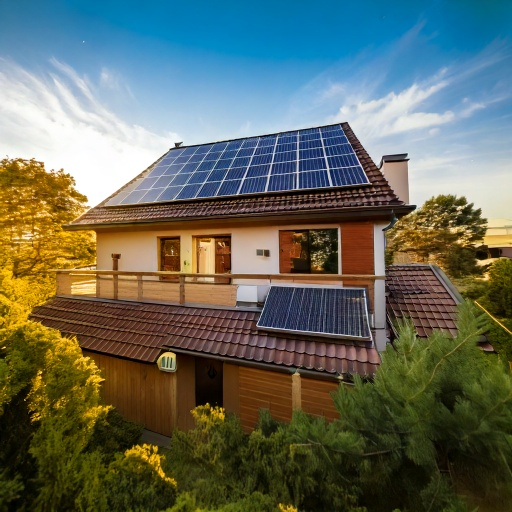
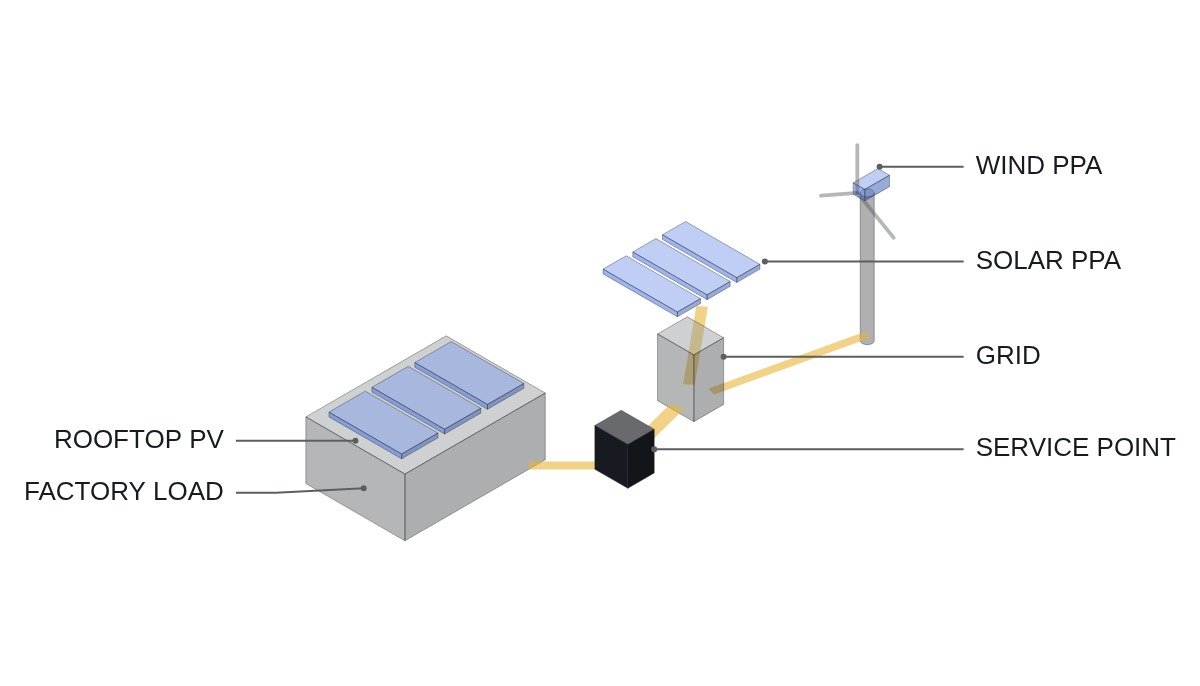
With on-site generation, generation and consumption both happen behind the site’s service point. Purchased power falls by the amount generated, and since the power does not cross the grid, no transmission- or distribution-related charges apply. There is no counterparty and no credit risk. In exchange, installable capacity is set by roof and spare land area, and the larger the manufacturing process, the smaller its share of consumption.
With a PPA, renewable power is secured through a long-term contract with a generator outside the site. Volume can grow to the contract size, and a fixed contract price hedges long-term power-cost swings. In exchange, the power crosses the grid and carries network-related costs, and risks such as generation shortfall, generator default, or relocation of the facility must be managed for the contract term.
The connecting logic is this. On-site generation is cheap but small; a PPA is large but conditional. The two are better seen as a sequence than as substitutes. Fill what the site can hold first; the real design question is which shape of PPA should cover the remaining shortfall.
| Item | On-site | PPA (direct / third-party) |
|---|---|---|
| Size cap | Site roof and land area | Contract size |
| Network charges | None | Apply |
| Price lock | Effectively fixed by capex | Fixed by contract price |
| Counterparty risk | None | Generator credit and volume |
| Term burden | Equipment life | Bound by long-term contract |
| Additionality | Clear | Clear when contracting new capacity |
Read the table starting from the size-cap row. If on-site generation cannot reach the target volume, the shortfall needs another instrument no matter how favorable the other five rows are. On-site wins on unit cost and PPAs win on scale, so the comparison should be made not at equal volume but on the combination that fills the target volume.
How the Matching Standard Flips the Decision
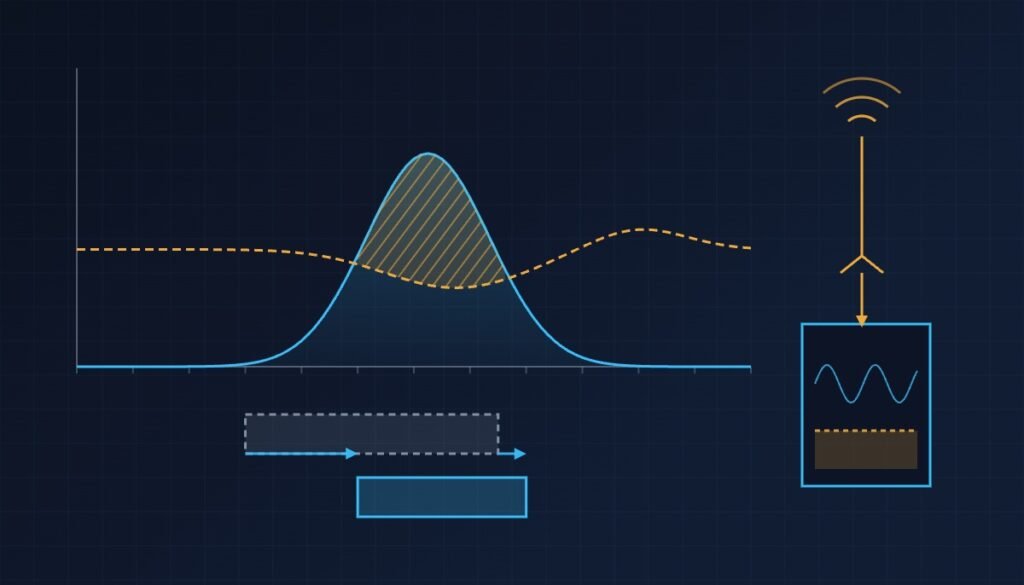
Annual volume matching counts 100% when renewable procurement over a year equals consumption. Under this standard, a solar PPA can generate more than consumption at midday and nothing at night, as long as the annual totals match. The cheapest way to fill the volume wins.
Hourly matching looks at the share of each hour’s consumption met by renewable power in that hour. Here a fundamental limit appears. For a site with a flat 24-hour load, the share that solar alone can hourly-match cannot exceed the fraction of the day during which the sun is up. However large the array, night-time matching stays at zero, and midday surplus does not raise the matching rate.
So an hourly-matching target changes the mix. Wind PPAs that can generate at night, storage that shifts midday surplus into the night, and rescheduling processes whose load can move all become options. This is why the optimal procurement mix changes for the same company when the required matching standard changes.
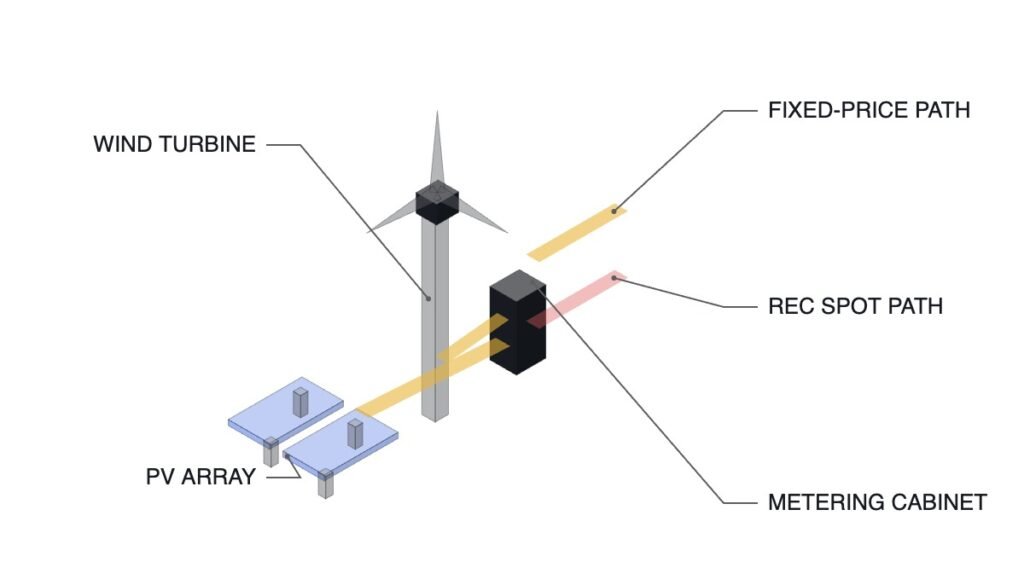
Contract structure interlocks with the matching standard too. An as-generated contract pays for whatever the plant produces, so the buyer carries the full difference between generation shape and load shape. Midday excess and night-time deficit must ultimately be bought or settled separately through the grid, and that cost does not appear in the PPA price sheet. A fixed-shape contract puts that difference on the generator, at a higher price. When comparing PPA prices, first align who carries the shape risk.
| Mix | Annual matching | Hourly matching |
|---|---|---|
| On-site solar | Contributes by area | Covers part of daytime only |
| Solar PPA | Scales easily | Night gap remains |
| PPA incl. wind | Can scale | Fills night and winter |
| PPA + storage | May be oversized | Smaller gap, higher cost |
In this table the annual-matching column fills up mostly with “works,” but the hourly-matching column shows a different gap for each mix. Choose instruments before fixing the matching standard, and a contract optimized for annual matching later becomes a renegotiation candidate when hourly requirements arrive.
What to Check on the Electrical Side
Running on-site generation without export requires a reverse-power relay at the service point and a path to limit or disconnect inverter output under reverse-flow conditions. As the generating plant grows, in-plant transformer capacity, protection coordination, and breaker interrupting ratings must be reviewed again; growing capacity without that review throws the in-plant protection scheme out of alignment.
A PPA is a matter of metering and settlement. If hourly matching is required, hourly meter data is needed on both the generation and demand sides, and rules for missing or erroneous meter data must be written into the contract. Causes of communication gaps differ by site, so they should be confirmed by measurement rather than assumed.
Decision Sequence
- Fix the required matching standard (annual volume or hourly) and the target share by year.
- Obtain the site’s hourly load curve.
- Calculate on-site capacity possible on site roofs and land, and its matching contribution.
- Size the shortfall and its timing (day, night, season).
- Choose the PPA source mix and whether storage is needed to match the shape of the shortfall.
- Fix the contract term, shortfall clauses, and treatment on facility relocation.
Boundary Conditions
The on-site-first principle weakens under two conditions. First, when remaining roof life is short or in-plant equipment has no headroom, so installing on-site generation requires major additional work. Second, when relocation or restructuring plans mean the same site cannot be used over the equipment’s life.
The PPA advantage flips when the contract term is far longer than the company’s planning cycle and the consumption outlook over that term is uncertain. If consumption falls, a fixed-volume contract becomes a burden. A contract also loses value when hourly-matching requirements tighten and only a single solar PPA has been secured.
The single decision criterion is this: under the required matching standard, maximize on-site generation first, then contract PPAs sized and shaped to the shortfall that remains.