VOLTENERTEC WEEKLY · 2026 Week 37 · 4/4
Conclusion. The Ministry of Climate, Energy and Environment is running the 58 days from September 19 to November 15 as the period for its autumn light-load power supply stabilization measures. Two items actually require hands-on work in the field. The charging window for PV-linked ESS moves from 06:00–15:00 to 10:00–16:00, and output curtailment of inflexible generation is carried out under a three-stage advance-notice scheme. Of these, only the latter has to be handled as an interlock; the advance notices are operating information, not interlocks.
1. The measures — what changes
On September 10, the Ministry of Climate, Energy and Environment, chaired by Minister Kim Sung-hwan, reviewed the autumn power supply situation and grid operating plan at the Han River Flood Control Office in Seoul. If summer’s challenge was a demand surge driven by heat waves, the background in autumn is that cooling demand falls while PV and wind output rise with sunshine and wind conditions, so supply can greatly exceed demand in certain hours. The government projects total power demand to fall to 47.3GW at 1 p.m. on September 25, Chuseok day.
The response is not to add supply but to cut generation and lift demand. Maintenance schedules of major generating units are adjusted to minimize operation, and coal plant complex operation is reduced. At the same time, the plus-DR program is improved and the charging hours of PV-linked ESS are shifted. For EV charging, a rate discount applies from 11 a.m. to 2 p.m. on weekends and public holidays in September and October.
| Item | Normal | Measures period (9/19–11/15, 58 days) |
|---|---|---|
| PV-linked ESS charging window | 06:00–15:00 | 10:00–16:00 |
| Grid role of charging | Capturing tariff spread | Creating daytime demand, easing grid burden |
| Curtailment advance notice | – | 3 times: previous day / 09:00 same day / 30 min before |
| EV charging rates | Normal rates | Weekends/holidays 11–14h: 50% discount on energy charge for self-consumption, up to 32% cut for charging service operators |
| Coal plant complexes | Normal operation | Reduced operation |
| Reference minimum demand | – | 47.3GW projected at 13:00 on Chuseok day |
The only row in the table where an equipment-side setting actually changes is the first. The problem is that this single row is scattered across four places inside the installation.
2. Why moving the charging window is not a single setting
Moving the charging window from 06:00–15:00 to 10:00–16:00 looks like editing two times on a screen. In practice, the same times are entered four times in four different places: the charge-permit window of the PCS scheduler, the daily operating plan in the EMS, the metering and tariff time-of-use settings, and the SOC target curve. If these four do not move together, a contradiction appears in the 09:00–10:00 interval: charging is prohibited, but the SOC target still follows the old schedule and demands a rising curve.
In such a contradictory interval, the PCS usually prioritizes tracking the target and tries to charge, is blocked by the upper-level interlock, and repeatedly starts and stops. Unnecessary cycles accumulate on the contactors and IGBT gate drives, and the alarm log fills with repeated trips of unknown cause. The substance of changing the charging window is not editing times, but making all four settings reference the same time source.
3. Curtailment commands — advance notice is not an interlock
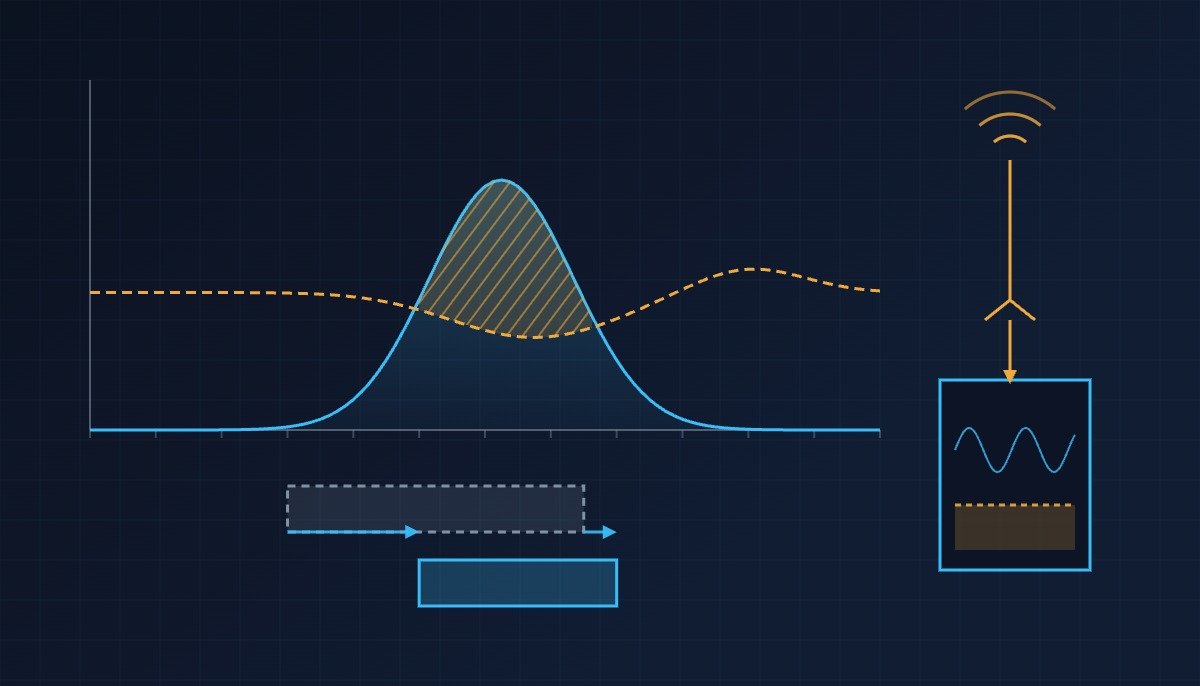
To improve predictability for generators, the government said that when curtailment is expected it will give three advance notices: the previous day, at 9 a.m. on the day, and 30 minutes before curtailment. There is a caveat, however: when real-time control is needed because of sudden weather changes, curtailment will begin after advance notice only to the extent possible.
That caveat determines the design condition. The three notices are information for operational convenience, not the command itself. The logic therefore must not rest on the premise that “control is prepared only when the 30-minute notice arrives.” More important is failure to receive the command. Holding rated output while the communication link is down is not fail-safe behavior. It is a situation in which the grid side has requested control and the installation, unaware of it, runs at maximum output. A separate behavior of ramping down to a pre-agreed limited output on loss of communication must be defined.
4. I/O map and control sequence
Addresses are notation examples; the limited output value and return conditions depend on the grid connection agreement and local grid conditions.
| Address | Variable | Meaning |
|---|---|---|
| DI201 | DI_SAFETY_LOOP_HEALTHY | Hardwired safety circuit healthy (including EMO chain), TRUE = healthy |
| DI202 | DI_COMM_LINK_HEALTHY | Communication link to grid operator healthy |
| DI203 | DI_CURTAIL_CMD_ACTIVE | Curtailment command received |
| DI204 | DI_SEASON_MODE_ACTIVE | Light-load measures mode (58 days) flag |
| AI201 | AI_GRID_FREQ | Grid frequency (Hz) |
| AI202 | AI_POC_ACTIVE_POWER | Active power at point of connection (kW) |
| AI203 | AI_ESS_SOC | ESS state of charge (%) |
| AO201 | AO_ACTIVE_POWER_LIMIT | Inverter active power limit setpoint (kW) |
| DO201 | DO_ESS_CHARGE_ENABLE | ESS charge permit |
| DO202 | DO_PV_INVERTER_RUN_PERMIT | PV inverter run permit |
(* Autumn light-load operating sequence - order: safety interlock, communication, command, charging window *)
(* STEP 1 : Hardwired safety circuit. The PLC only reads its status and never bypasses it *)
IF NOT DI_SAFETY_LOOP_HEALTHY THEN          (* DI201 *)
    DO_PV_INVERTER_RUN_PERMIT := FALSE;
    DO_ESS_CHARGE_ENABLE := FALSE;
    RETURN;
END_IF;

(* STEP 2 : Loss of communication. Ramp down to the pre-agreed limited output, not rated *)
IF NOT DI_COMM_LINK_HEALTHY THEN            (* DI202 *)
    AO_ACTIVE_POWER_LIMIT := P_FALLBACK_LIMIT;
ELSIF DI_CURTAIL_CMD_ACTIVE THEN            (* DI203 : when a command is received *)
    AO_ACTIVE_POWER_LIMIT := P_CURTAIL_SETPOINT;
ELSE
    AO_ACTIVE_POWER_LIMIT := P_RATED;
END_IF;

(* STEP 3 : Charging window selection. All four settings must reference the same time source *)
IF DI_SEASON_MODE_ACTIVE THEN               (* DI204 : 09-19 ~ 11-15 *)
    CHARGE_WINDOW_START := T_1000;          (* 10:00 *)
    CHARGE_WINDOW_END   := T_1600;          (* 16:00 *)
ELSE
    CHARGE_WINDOW_START := T_0600;          (* 06:00 *)
    CHARGE_WINDOW_END   := T_1500;          (* 15:00 *)
END_IF;

(* STEP 4 : Charge permit. Evaluate SOC upper limit and charging window together *)
IF (RTC_TIME >= CHARGE_WINDOW_START) AND (RTC_TIME < CHARGE_WINDOW_END)
   AND (AI_ESS_SOC < SOC_UPPER_LIMIT) THEN  (* AI203 *)
    DO_ESS_CHARGE_ENABLE := TRUE;
ELSE
    DO_ESS_CHARGE_ENABLE := FALSE;
END_IF;

(* STEP 5 : Run permit. Issue the permit only after the limit setpoint has been applied *)
DO_PV_INVERTER_RUN_PERMIT := TRUE;
5. Execution checklist
- Have the charging-window settings in all four places — PCS scheduler, EMS operating plan, metering time-of-use, and SOC target curve — been arranged to read from the same time source?
- Are both the switchover at 00:00 on September 19 and the reversion on November 16 registered in the schedule (a missed reversion causes tariff losses)?
- Is the behavior on loss of communication defined as a pre-agreed limited output rather than “hold rated”?
- Are the receive, execution and release times of curtailment commands recorded in the event log to the second (they become settlement evidence)?
- Is the real-time control case without a 30-minute notice included in the test items?
- Has the absence of repeated start-stop at the charging-window boundary (09:59–10:01) been verified by measurement?
- Has the SOC target for the low-demand Chuseok holiday period (around 9/25) been separated into its own profile?
- Have the drawings confirmed that the EMO chain is wired to trip directly without passing through PLC outputs?
6. Prior art — active power control and MPPT are designed together
The moment a curtailment command is executed, the PV inverter leaves the maximum power point (MPP) and runs at the specified active power. The response characteristics of the return to MPP after the command is released determine the generation loss. Registered patent KR102161812B1 of the Yonsei University Industry-Academic Cooperation Foundation (filed 2019-06-18, registered 2020-10-05, Active per Google Patents) claims a PV generation system that performs MPPT based on active power control to track the maximum power point quickly and accurately when irradiance varies. The patent does not claim receiving a grid operator’s curtailment command or the procedure for executing it, and is cited only as background technology showing the design direction of combining active power control with MPPT.
7. Boundary conditions — where this setting flips
- Limited period: The 10:00–16:00 charging window is a setting for the 58-day measures. Leaving it in place permanently for convenience means missing the light-load tariff periods after the measures end, reducing revenue. The reversion schedule is itself part of the design.
- Limits of the notice scheme: The three advance notices apply to predictable cases; with sudden weather changes, real-time control comes in. A preparation sequence built on the assumption of receiving notices is defeated in this case.
- Nature of the projection: 47.3GW at 13:00 on Chuseok day is a projection. The size of the surplus varies with actual demand and irradiance and wind conditions, so the frequency and depth of curtailment can only be confirmed by measurement. Requires waveform analysis and field measurement.
In summary, there is one single criterion the installation must pass during these 58 days. What does the installation do when the grid-side command does not arrive? Behavior when a command does arrive is mostly designed already. If behavior in intervals where communication is lost or a notice is missing is not defined, that interval becomes the weak point of this measures period.
Source: Electric Power Journal (Jeongi Sinmun), September 10, 2026, “Light-load risk grows as renewables increase… autumn power supply stabilization measures to run”. Patent bibliographic data and legal status checked directly on Google Patents (2026-09-11).