Conclusion. At a press briefing on the 3rd of last month, Kim Sung-hwan, Minister of Climate, Energy and Environment, presented levelized costs of electricity by source, including renewable energy certificates (RECs): KRW 79/kWh for nuclear, KRW 180/kWh for solar, KRW 200/kWh for onshore wind and around KRW 300/kWh for offshore wind. On cost alone, nuclear is still the cheapest. But whether new nuclear units and small modular reactors (SMRs) are included has to be settled through a national public deliberation process for the 12th Basic Plan for Electricity Supply and Demand (draft due September to early October).
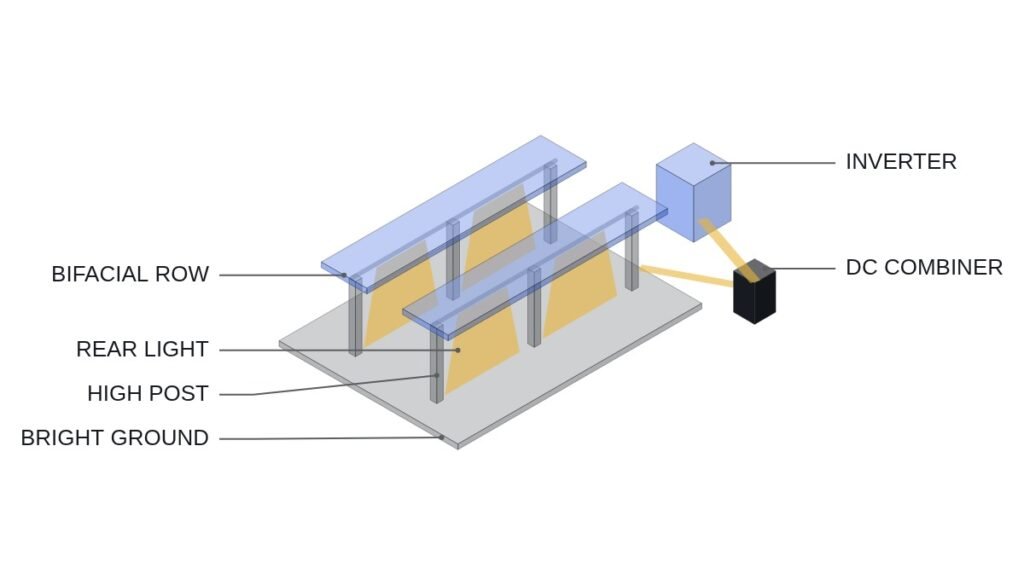
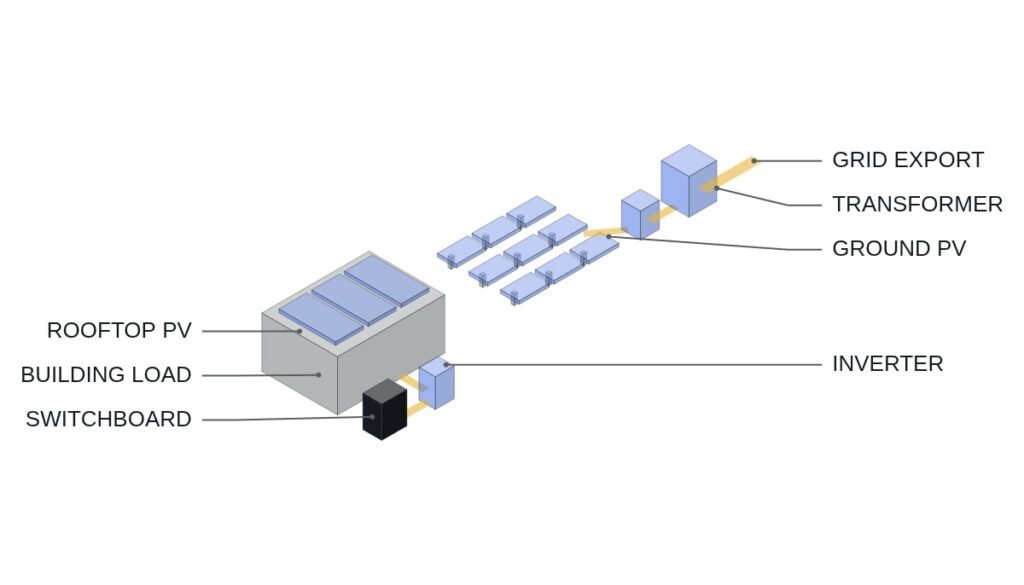
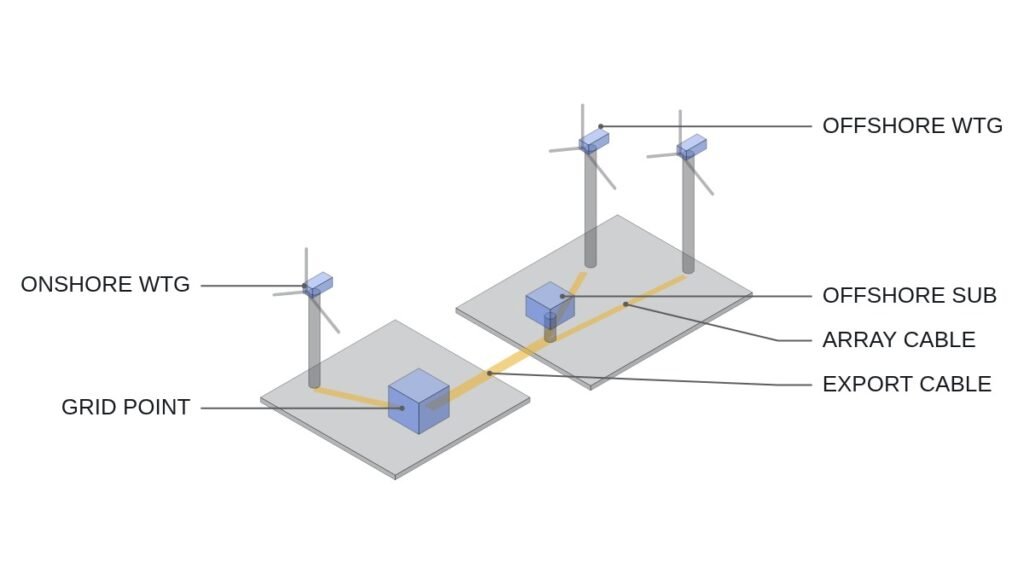
Early achievement of 100 GW of renewables, by contrast, has already been fixed as a second-half policy priority, and mandatory solar on factory roofs and planned siting for offshore wind have entered the implementation stage. Under the time constraint of “power that can be switched on immediately” demanded by AI semiconductor megaprojects, permitting and build speed, not unit cost, becomes the condition that decides which side has the advantage.
Nuclear may lead on per-source cost, but add the time axis of permitting and construction and the ranking changes.
Speed versus cost: where nuclear and renewables each have the edge
At its second-half work report, held on the 4th of last month at the Blue House guest house, the Ministry of Climate, Energy and Environment named support for advanced-industry megaprojects such as semiconductors and AI data centres as a core task. Aiming for early achievement of 100 GW of renewables, the government is pushing mandatory factory-roof solar and planned siting for offshore wind, is building grid capacity pre-emptively so that AI data centres and advanced industrial complexes can move in immediately, and is also considering a new dedicated power system authority (tentatively named the Electricity Supervisory Service). New nuclear and SMRs, meanwhile, remain at the stage of “picking up the pace of national public deliberation from next week” on whether they will be reflected in the 12th Basic Plan.
| Item | New nuclear / SMR | Renewables (solar, offshore wind) |
|---|---|---|
| LCOE incl. REC (KRW/kWh) | 79 (lowest) | Solar 180 · onshore wind 200 · offshore wind around 300 |
| Policy stage, H2 2026 | Public deliberation on inclusion in the 12th Basic Plan (draft Sept-Oct) | Factory-roof solar mandate and offshore wind planned siting in implementation |
| Build period | Relatively long | Relatively short (especially rooftop solar) |
| AI megaproject response | Not yet confirmed, so cannot be deployed immediately | Being pursued alongside pre-emptive grid build-out |
What this table says is that the cost advantage and the in-service-date advantage are not on the same side. Nuclear leads on generation cost but needs time for policy confirmation and construction; renewables lose on cost but are already inside mandated procedures, so they can follow the AI power demand curve more quickly.
Where it wins, where it doesn’t
Where renewables win. Current condition: an AI data centre or advanced industrial complex has a fixed move-in date, and the grid connection is being built pre-emptively for it. After applying renewables: rooftop solar and planned-siting offshore wind are already in procedures that are moving, so capacity can start to appear on a timeline that overlaps the load’s arrival. Connecting logic: when the load’s start date is fixed and near, the source that can be energised first captures the demand, regardless of unit cost.
Where renewables don’t win. Current condition: the load is a long-horizon block of demand whose timing is flexible, and what matters is the cost of each kWh over decades. After applying renewables: the higher per-kWh cost (KRW 180/kWh for solar, around KRW 300/kWh for offshore wind, against KRW 79/kWh for nuclear) accumulates over the whole operating life. Connecting logic: when time pressure is removed, the ranking returns to the cost column, where nuclear leads.
Reading the gap from the grid side
From a power systems perspective, the comparison is not only between two generation types but between two different kinds of capacity. A nuclear unit arrives as one large block at a single connection point, on a single date. Renewables arrive as many smaller blocks, spread over many connection points, that come online progressively. A data centre load also tends to arrive in stages as halls are fitted out, so its shape is closer to the staircase of renewable additions than to the single step of a new reactor.
This is why the pre-emptive grid build-out mentioned in the work report matters as much as the generation itself. Rooftop solar placed on factory roofs sits close to industrial load and can use existing distribution connections. Offshore wind needs new transmission from the coast. The speed advantage of renewables is therefore strongest for rooftop solar and weakest for sources that depend on new long-distance transmission, which is exactly where the “grid connection delay” boundary below applies.
The other side of this is that variable renewables alone do not deliver the “power that can be switched on immediately” in the sense of firm, around-the-clock supply. Delivering a fixed data centre load from variable sources brings in storage, backup and dispatch questions that are not visible in a per-kWh cost table. Those are not quantified here, but they are the reason the speed advantage should be read as an advantage in when capacity appears, not as an equivalence in what that capacity delivers.
Character comparison by decision axis
| Decision axis | New nuclear / SMR | Renewables |
|---|---|---|
| Unit cost | Advantage | Disadvantage |
| Policy certainty now | Pending deliberation | Already mandated |
| Capacity arrival shape | One large step | Many small steps |
| Grid connection form | Single large node | Many distributed nodes |
| Output character | Steady | Variable |
| Main schedule risk | Permitting and construction | Grid connection and siting rules |
The table shows that neither source wins on every axis. Nuclear takes the cost and output-character rows; renewables take the policy-certainty and arrival-shape rows. Which rows count most depends on how close and how fixed the load’s start date is, and that is the variable to pin down first.
Decision order
- Fix the load’s required in-service date and how firm it is. If it is near and fixed, weigh the policy-stage and build-period rows first.
- Check whether the 12th Basic Plan draft (September to early October) actually includes new nuclear or SMRs, and on what timeline.
- Check the grid connection path for the renewable option: distribution-level rooftop solar or transmission-dependent offshore wind.
- Only after the time question is answered, compare the per-kWh cost column.
Boundary conditions
- If new nuclear and SMRs are actually reflected in the 12th Basic Plan and permitting moves faster than planned, the cost advantage can offset the time disadvantage.
- If renewable expansion slows because of grid connection delays or delays in finalising setback-distance rules, the speed advantage itself disappears.
The single criterion that decides this issue is speed. However favourable the generation cost, if the in-service date cannot keep up with the AI power demand curve, that advantage will not be realised in this second-half policy phase.
References: Financial News, “Review of LNG combined heat and power plant for Honam semiconductor complex” (2026-08-04, citing Minister of Climate, Energy and Environment Kim Sung-hwan’s second-half work report and press briefing). Patent KR102085947B1 — Daon Technics Co., Ltd., “Building-integrated photovoltaic roof and construction method thereof” (filed 2019-08-06, registered 2020-03-06; legal status Active per Google Patents, expected expiry 2039-08-06 — cited as technical background on heat dissipation and seismic structure for factory-roof solar installations).