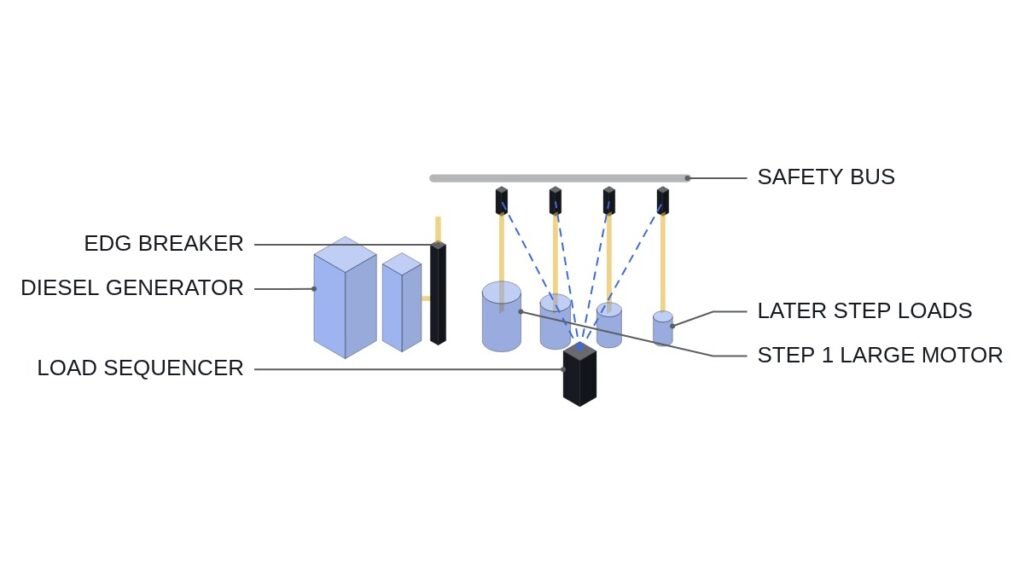
EDG Load Sequencing: Fixed Timer or Voltage/Frequency Recovery Check?
Choosing between fixed timers and voltage/frequency recovery checks for EDG load sequencer steps, with floor/ceiling timers and safety analysis fit.
Choosing between fixed timers and voltage/frequency recovery checks for EDG load sequencer steps, with floor/ceiling timers and safety analysis fit.
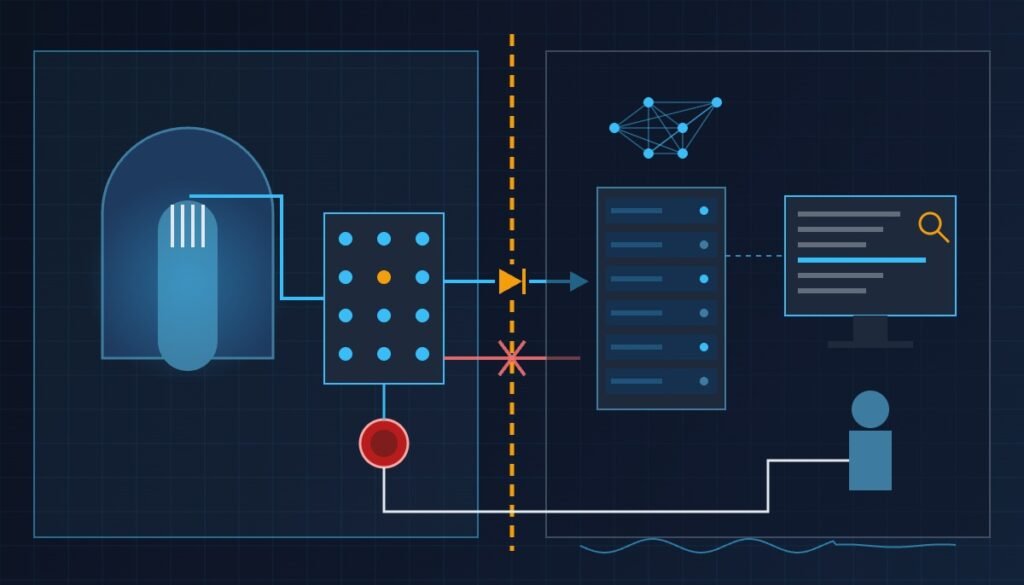
56th Power Forum: 56.7% trust AI analysis, 6.8% would allow autonomous judgment. An electrical layout that keeps nuclear O&M AI in an advisory class outside protection signal paths, with interlock order, I/O map and ST pseudocode.
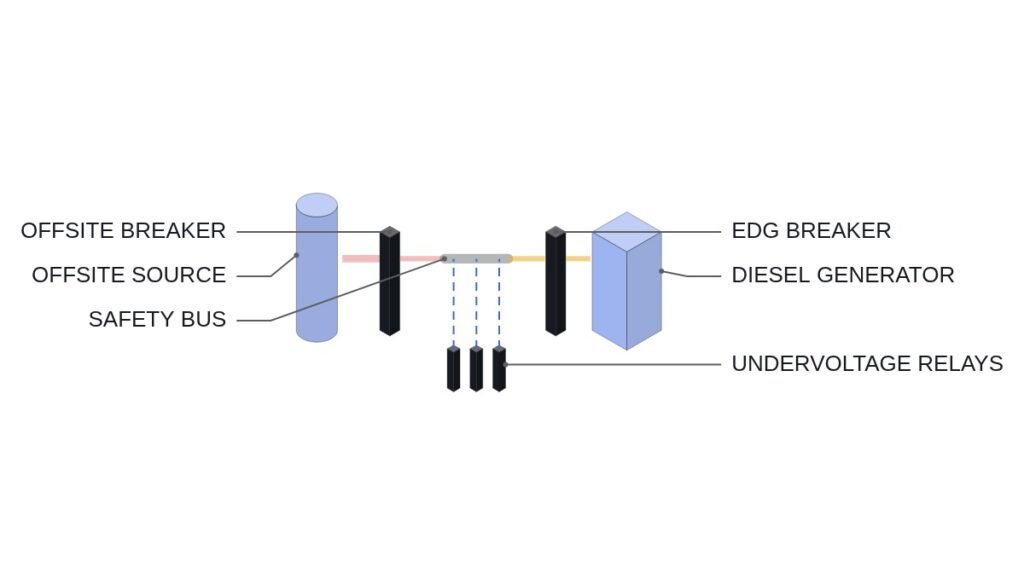
Placing the delay of two-level undervoltage detection (loss and degraded voltage) between motor-start dip and motor thermal limit on LOOP.
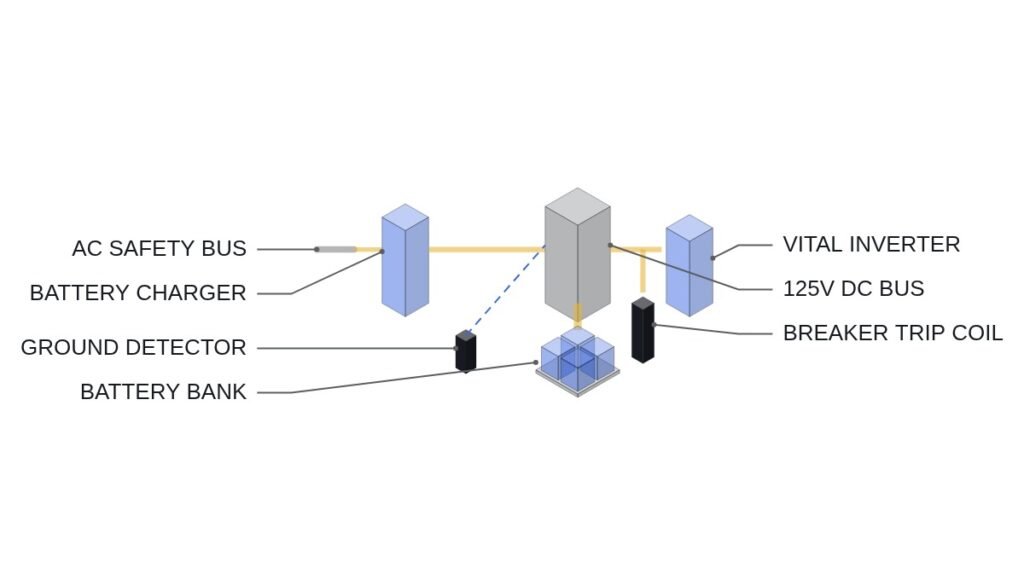
Duty-cycle battery sizing, charger sizing formula, and charger type choice for a Class 1E 125V DC system, driven by battery-out maintenance.
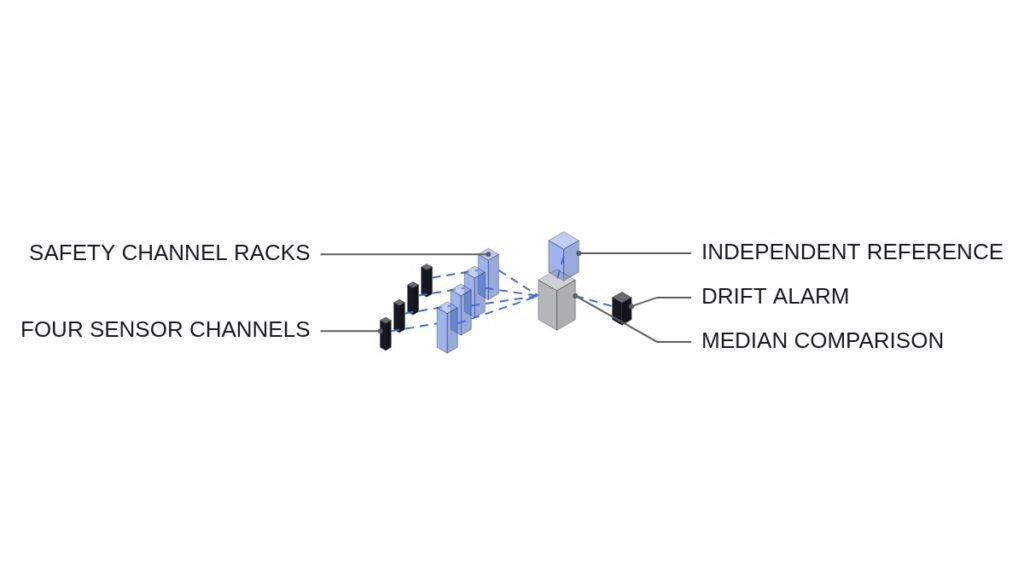
Managing safety channel drift with calibration and channel checks, and catching common drift with median and independent-reference comparison.
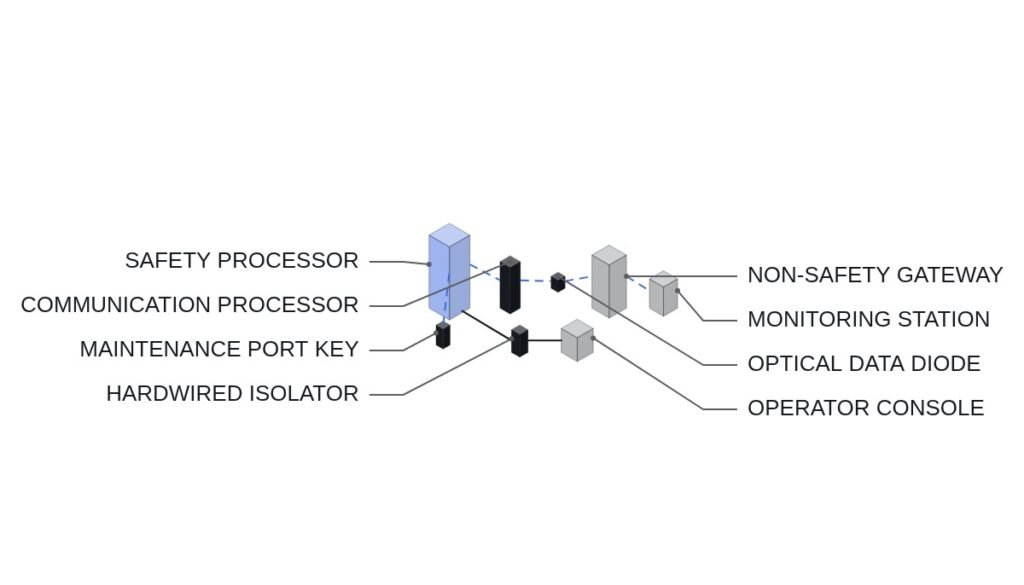
Why one-way communication in safety digital I&C needs all three: a physical-layer one-way link, an ACK-free protocol, and execution independence.
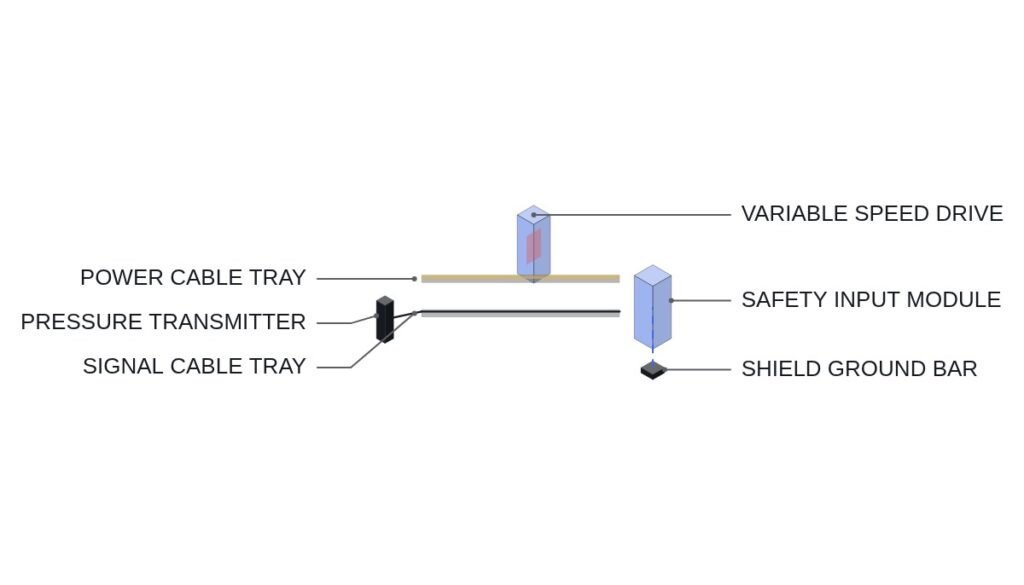
Why noise on nuclear safety 4-20 mA signals is reduced first by cable separation and shield grounding, not filters, within a response time budget.
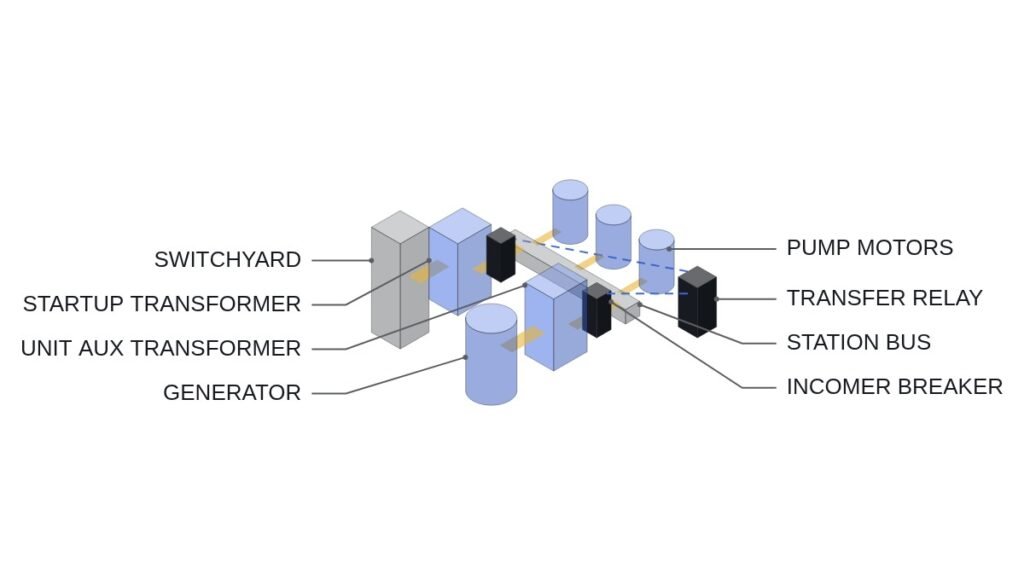
How to sequence a UAT-to-SAT bus transfer after a generator trip: residual-voltage and phase-angle interlocks, method fallback logic, and why a GCB changes the premise.
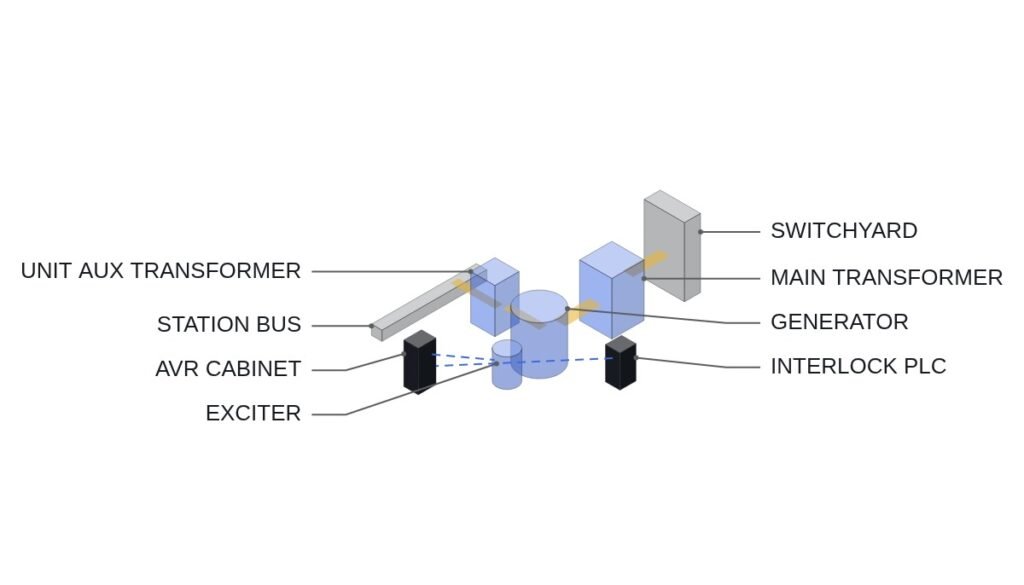
Accepting grid reactive power requests on a nuclear generator: coordinating UEL, OEL and V/Hz limiters with a station service bus low-voltage interlock.
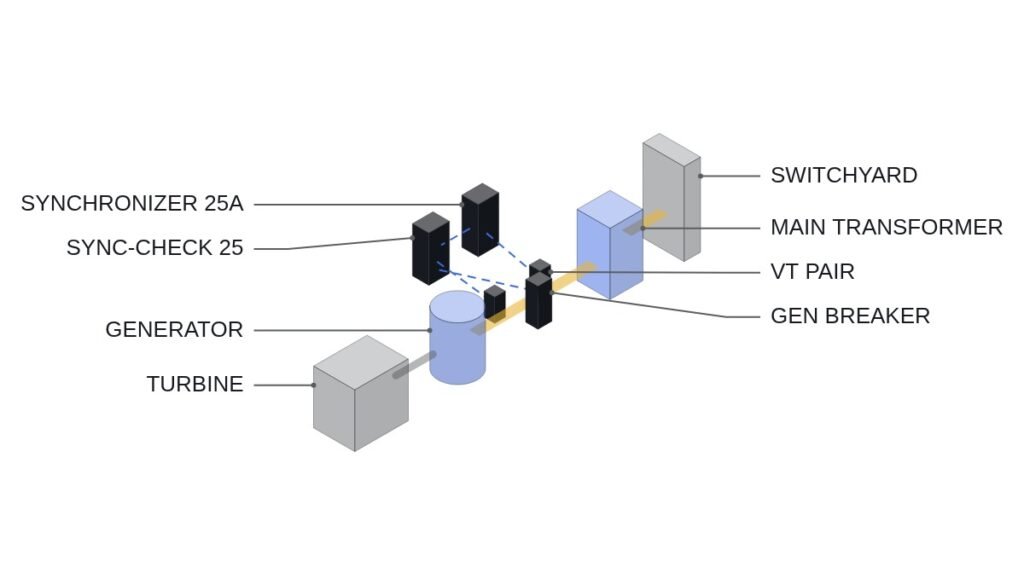
Why a nuclear main generator needs a sync-check relay (25) wired in series and independent of the auto-synchronizer (25A), plus advance angle and closing time monitoring.