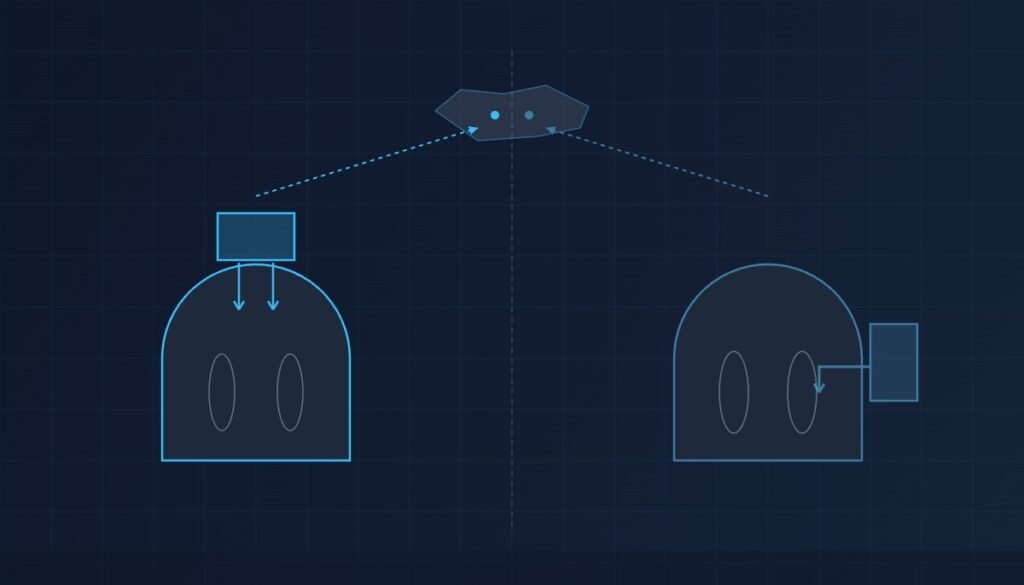
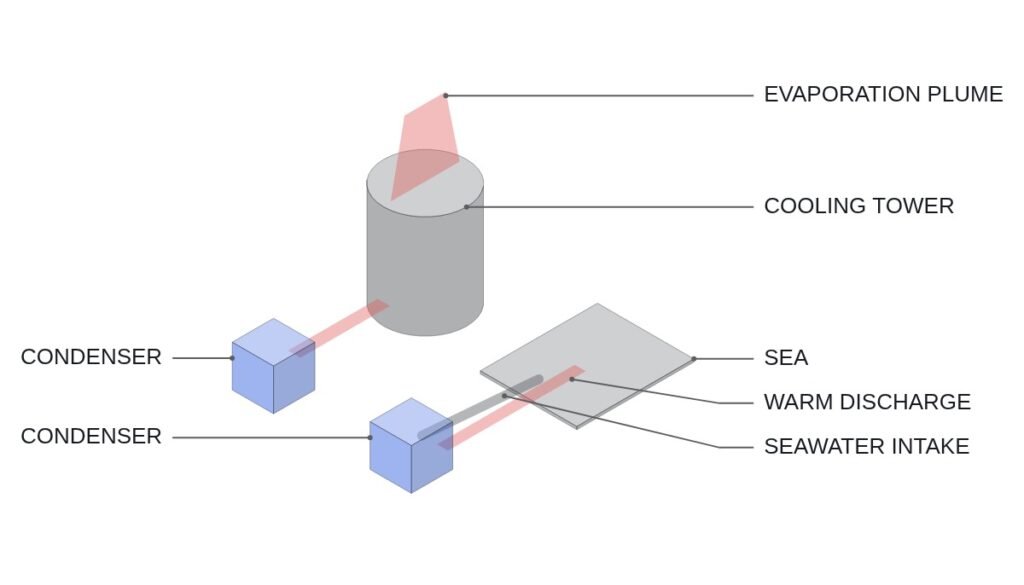
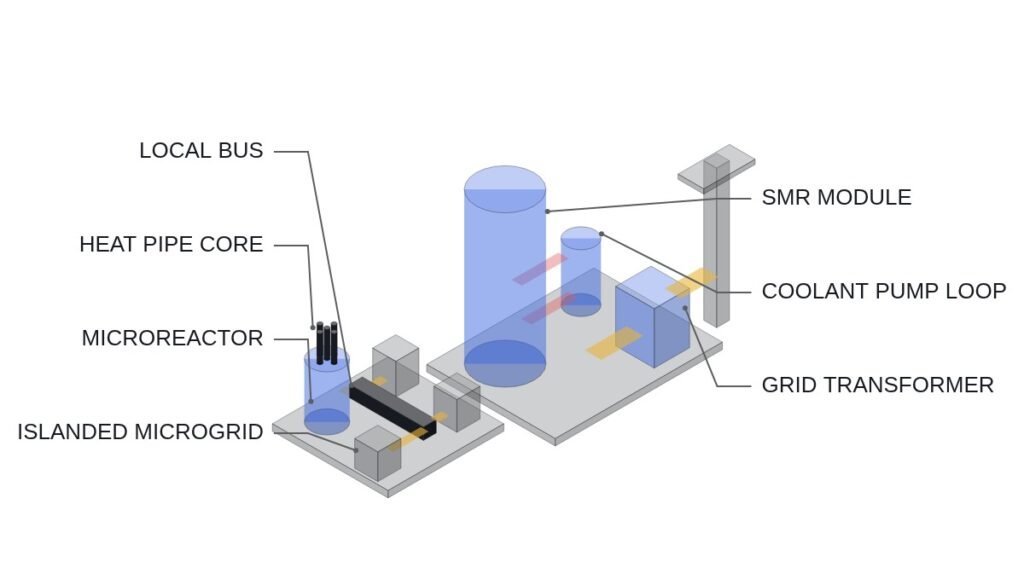
In a nuclear power system, what gets more design attention than the generator itself is the cooling and safety systems. Most of the system exists to keep a large output stable and sustained over a long period.
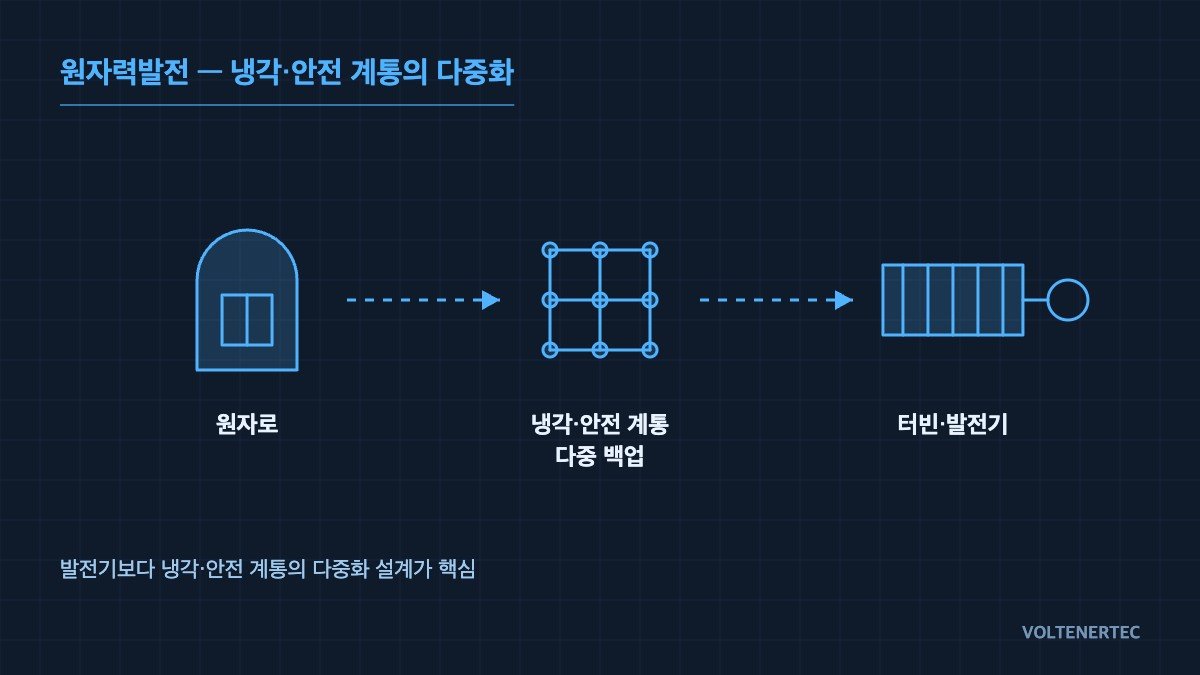
Core elements of the system
| Element | Role |
|---|---|
| Cooling system | Continuously removes heat from the reactor to hold a safe temperature |
| Safety systems (redundant) | Key equipment built in double or triple configurations so the plant can shut down even with a single failure |
| Grid connection equipment | Delivers the large output to the transmission network stably |
Implication: of the three elements in the table, two deal with heat and safety and only one deals with delivering output. The make-up of the system itself is weighted toward keeping the plant stable rather than toward generation. When reading the table, check first whether heat removal and safe shutdown are maintained under failure conditions, before looking at generation efficiency.
Why redundancy is mandatory
Because the plant is large and runs for long periods, a single equipment failure that takes the whole system down is costly. That is why cooling and safety systems are designed from the start on the assumption of multiple backups. This redundancy is also a main reason construction costs and licensing periods grow.
Summary
In a nuclear power system, design effort is concentrated not on generation itself but on the multiple systems that keep the plant safe. This structure sets both safety and construction cost at the same time.
Reading redundancy as an electrical engineer
For anyone who has designed control panels for automated equipment, the logic of a nuclear plant looks familiar, only scaled up. On a production machine, the servo drive that does the work is not where most of the design hours go. The hours go into the safety circuit, the interlock chain, the monitoring of every state that could go wrong, and the question of what happens when one component fails. A nuclear plant is the extreme case of the same principle: the generator is a well-understood machine, and the difficult engineering sits around it.
The key difference is that a reactor keeps producing heat even after it is shut down. On a machine, stopping the drive removes the energy source. In a reactor, shutting down the chain reaction does not remove the need for cooling. That is why the cooling system and the safety systems are inseparable here: the safety function is not only to stop, but to keep removing heat after stopping, under failure conditions.
The grid connection equipment in the table deserves a similar reading. It is listed as an output path, but from the plant side it also matters as a supply path. The equipment that cools the reactor needs power, so the plant’s relationship with the grid, and its backup supplies when the grid is lost, are part of the safety picture, not just the revenue picture.
What each element demands in design terms
The three elements of the system make different demands on the designer. Comparing them by character rather than by numbers makes it clearer why cost concentrates where it does.
| Element | Failure it guards against | Design burden |
|---|---|---|
| Cooling system | Heat not being removed | Must work continuously, including after shutdown |
| Safety systems | A single failure stopping the safety function | Duplicated or triplicated trains, kept independent |
| Grid connection | Unstable delivery of large output | Stable interface to the transmission network |
| Generator | Loss of electrical output | Conventional machine, comparatively mature |
The table shows why the generator is the smallest part of the problem. It guards against a commercial loss, while the cooling and safety systems guard against a loss of control over heat. Anything that must keep working under failure conditions has to be duplicated, separated and tested, and that multiplication is where construction cost and licensing time accumulate.
How to read cost and schedule claims
- Check the safety interlock philosophy first. Before comparing costs, confirm how many independent safety trains a design relies on and whether any safety function depends on software alone. Hard-wired safety paths must not be bypassed by software.
- Separate generation equipment from safety equipment. A claim that a design is cheaper should say which part got cheaper. Savings in the turbine island do not mean savings in the safety systems.
- Ask how redundancy is achieved. Duplicating equipment and designing so that fewer active components are needed are different routes, and they carry different cost and licensing implications.
- Treat licensing time as part of cost. Because redundancy lengthens licensing, schedule risk belongs in the same calculation as equipment cost.
- Check the backup power arrangement. Since cooling equipment needs power, confirm how the plant supplies it when the grid connection is lost.
Boundary conditions
The statement that cooling and safety systems dominate the design holds for plants built around large output and long, continuous operation. If a design reduces the number of active components needed to remove heat, the share of cost taken by redundant equipment can shift, and cost comparisons based on conventional plants no longer transfer directly. Equally, a design that looks simpler on paper still has to show that its safety functions survive a single failure; if it cannot, the redundancy returns as a licensing requirement. The single criterion for comparing designs is this: how the safety function is kept working under a single failure, because that answer sets both safety and construction cost.