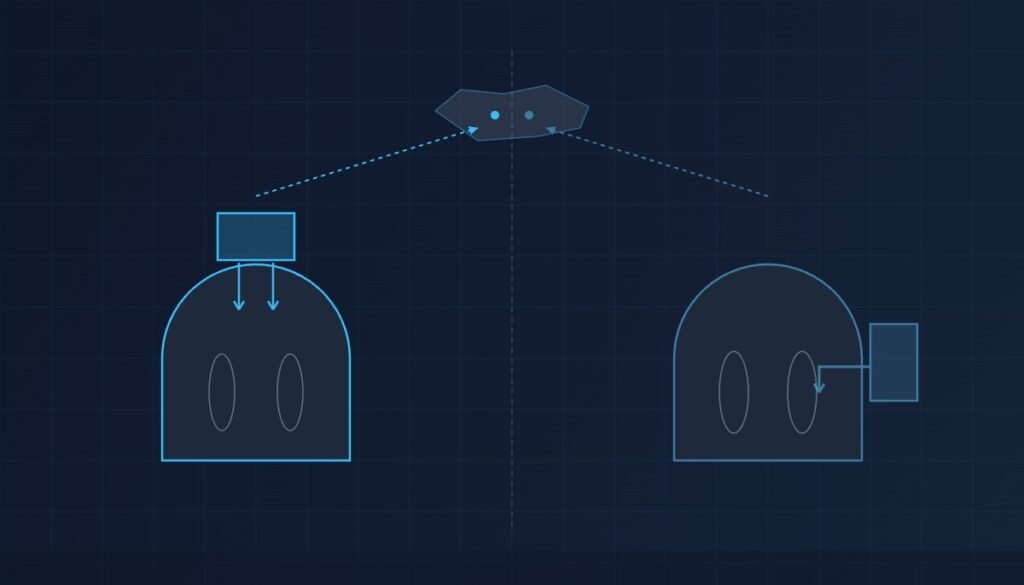
Here is the conclusion up front. Microreactors win at islands, remote industrial sites and military bases that run on an islanded grid and need load following on a timescale of seconds to minutes. SMRs win at large industrial complexes and data center campuses that need GW-scale baseload supplied while permanently connected to the grid. The selection criterion is not output size but “grid configuration.”
The question raised by ZiaCore reaching criticality
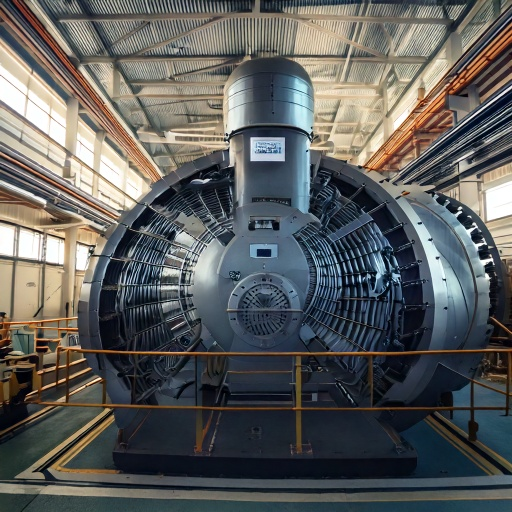
In August 2026, the ZiaCore microreactor designed by Los Alamos National Laboratory (LANL) succeeded in a high-temperature, low-power criticality experiment. Unlike conventional SMRs (tens to hundreds of MW), microreactors are in the few-MW class and use heat pipe cooling, eliminating the liquid coolant circulation system altogether. For an electrical engineer, this difference is not just a matter of output scale; it means the entire grid interconnection interlock design has to be rewritten.
Where it wins: the microreactor
Current condition: At island or remote industrial sites, the cost of building a transmission line to the main grid often exceeds the cost of the generating plant itself. Such sites do not have distribution infrastructure capable of taking SMR-scale capacity in the first place.
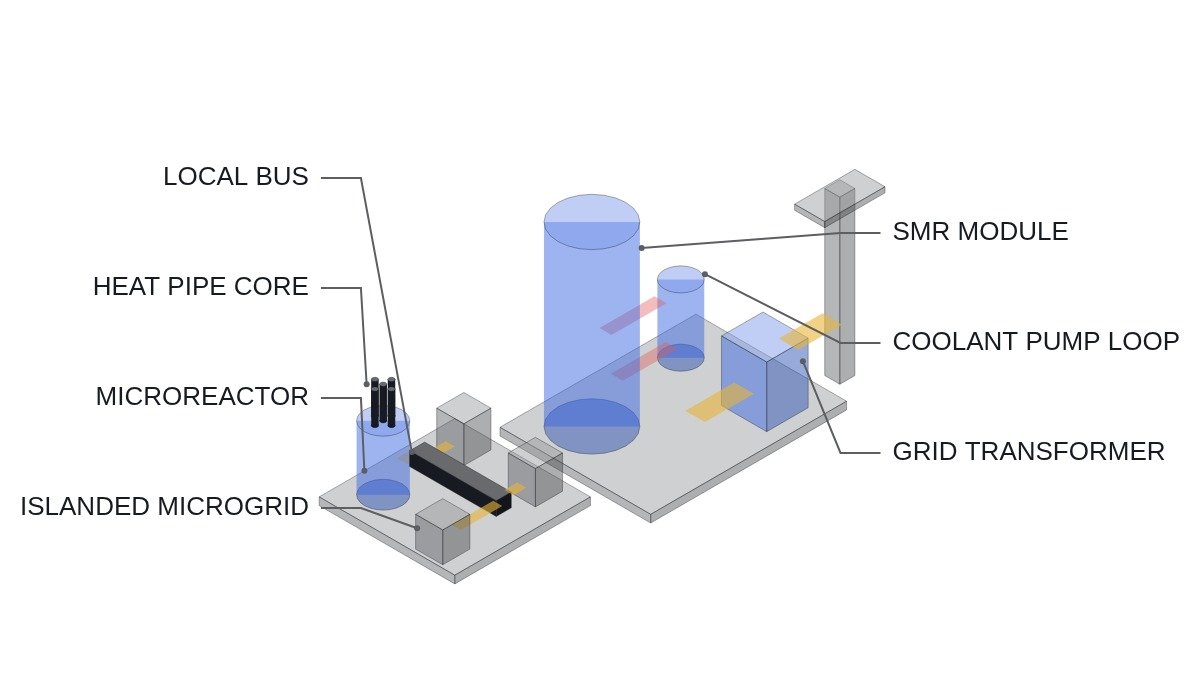
Change after deployment: Placing a few-MW heat pipe microreactor lets the site form its own local microgrid without a separate transmission line. The heat pipe cooling system has no circulation pump or valve interlocks, so the number of failure points itself goes down.
Connecting logic: Load-following response tends to be faster than an SMR’s. An SMR’s core has a large thermal capacity, so reaching rated output after a power change command typically takes minutes, while a microreactor’s small core allows response in seconds. That makes it better at absorbing the frequency swings typical of islanded grids (deviations of ±0.5Hz or more during sudden load changes).
Where it doesn’t: the SMR’s ground
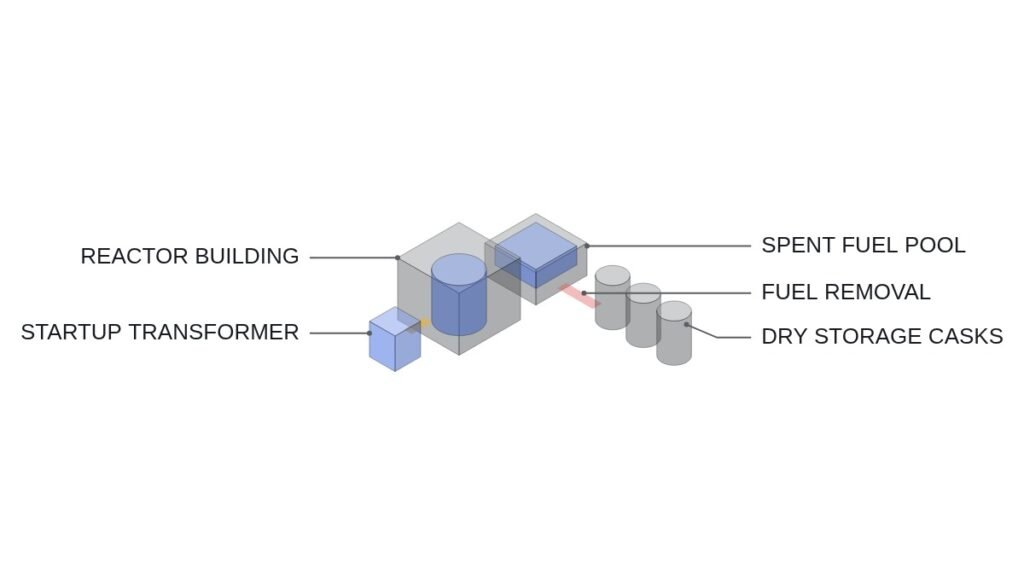
Conversely, where permanent grid connection is possible and GW-scale baseload is needed, as at large industrial complexes or data center campuses, the SMR has the advantage. The levelized cost of electricity (LCOE) is lower on the SMR side, where economies of scale work, and with Doosan Enerbility already signing key equipment supply contracts with TerraPower, NuScale, X-energy and others, a supply chain is forming and SMR procurement lead times are trending relatively shorter. Microreactors are still at the criticality experiment stage, and their commercial supply chain is not as mature as the SMR’s.
Comparison table
| Item | Microreactor (heat pipe) | SMR (light water / sodium-cooled, etc.) |
|---|---|---|
| Rated output | Hundreds of kW to a few MW | Tens to hundreds of MW |
| Load-following response | Seconds | Minutes |
| Cooling method | Heat pipe, no circulation system | Liquid coolant circulation system required |
| Grid configuration | Suited to islanded grids | Suited to permanent grid connection (grid-tied) |
| Supply chain maturity | Criticality experiment stage | Equipment supply contracts under way |
| Representative examples | ZiaCore, Westinghouse eVinci | TerraPower Natrium, NuScale, i-SMR |
As the table shows, the two reactor types are not competitors; their roles separate according to grid configuration. Fixing “can this site be permanently grid-connected?” at the very start of interconnection design is how you avoid choosing the wrong reactor type.
Boundary conditions: where the advantage flips
The advantage reverses in scenarios where multiple microreactors are paralleled (clustered) to approach SMR-scale capacity. As the unit count grows, the complexity of the parallel interlocks (phase synchronization and output sharing logic between units) exceeds that of a single SMR unit, and the load-following speed advantage is offset by parallel control delays. The final selection criterion therefore comes down to one question: will this site be operated as an islanded grid, or can it be permanently connected to the grid?
References: IT Insight, “From microreactor criticality to AI campus conversion” (2026-08); Money Today, “Doosan Enerbility wins key equipment order for TerraPower SMR” (2026-08-14); Westinghouse Electric Company LLC patent US11300359B2 “Block Style Heat Exchanger for Heat Pipe Reactor”