Conclusion. On the KOSPI market on the 8th, KEPCO Engineering & Construction closed at KRW 142,600, up 16.60% from the previous trading day, and Doosan Enerbility closed at KRW 89,900, up 2.28%. On KOSDAQ, Orbitech, a nuclear radiation management and inspection company, and Seojeon Electric Machinery, a power equipment maker, each hit the daily upper limit. This was a second straight day of gains following the 7th, when KEPCO E&C jumped 13.66% and Doosan Enerbility 10.98%, on news that Korea and the United States are discussing a plan to build up to eight large nuclear reactors in the U.S. The conclusion from an electrical engineer’s standpoint is this.
If the talks actually lead to orders, what decides the real beneficiary structure is less the superiority of one reactor design over the other than the position in which Doosan Enerbility participates (sub-vendor or EPC lead). And that position depends on which becomes the basis of the contract: the U.S. licensing and construction track record that the AP1000 already has, or the design economics and construction-period record that the APR1400 has.
Because Doosan Enerbility can supply equipment to both the APR1400 and the AP1000, this week’s share price surge is pricing in the scope of Korean supply-chain participation before the outcome of any reactor-design competition.
Same 2-loop design, different emergency core cooling
According to a Financial News report on September 8, 2026, Korea and the United States are discussing a plan to put USD 120 billion of the USD 200 billion in investment in the U.S. (excluding shipbuilding) toward building eight large nuclear reactors in the U.S. Doosan Enerbility, which can supply equipment for both Korea’s APR1400 and Westinghouse’s AP1000, is cited as a leading beneficiary. The two designs look similar on the surface.
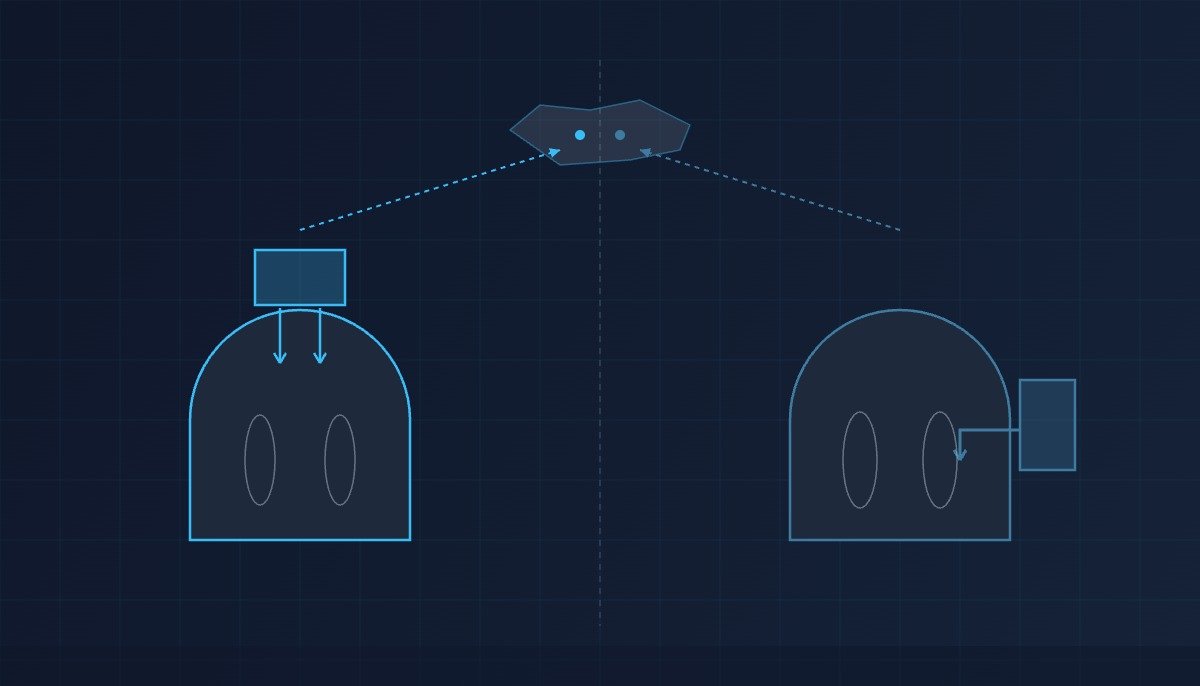
Both are 2-loop pressurized water reactors with two steam generators (France’s EPR and Japan’s APWR are 4-loop). But the emergency cooling method that cools the core in an accident is different. Westinghouse’s AP1000 adopts a fully passive core cooling system (Passive Core Cooling System) in which water flows down naturally from gravity tanks installed above the reactor for evaporative cooling, designed to sustain cooling for 72 hours without operator action, using only explosively actuated valves and DC-powered valves, without external or emergency power or compressed air.
The APR1400, by contrast, was the first in the world to apply a passive auxiliary feedwater system (PAFS) to a new commercial reactor, and adopted direct injection of emergency cooling water into the reactor vessel. This is regarded as more advanced than the EPR, which injects into the cooling loop, or the APWR, which combines the two methods.
| Item | AP1000 (Westinghouse) | APR1400 (Korean design) |
|---|---|---|
| Cooling loop configuration | 2-loop (2 steam generators) | 2-loop (2 steam generators) |
| Net electrical output | 1,117MWe | 1,400MWe class (per design name) |
| Emergency core cooling | Fully passive (gravity tanks, 72 hours self-sustaining without power) | Passive auxiliary feedwater system (PAFS) + direct reactor vessel injection, world-first commercial application |
| U.S. NRC design certification | Obtained in 2005 (first final design certification for Gen III+) | Holds certification (reported as dual certification with EUR; date of acquisition to be confirmed separately) |
| U.S. construction and operation record | Vogtle Units 3 and 4 in commercial operation (2023 and 2024) | None (four units at Barakah in the UAE completed; no construction in the U.S.) |
| Cost and schedule track record | Vogtle total project cost about USD 30 billion (exceeding the initial budget of USD 14 billion) | Holds a 52-month construction record in the UAE and Korea (U.S. local record unconfirmed) |
| Korean supply chain in the U.S. | Doosan Enerbility contract to supply equipment for four AP1000 units for the Fermi America data center (2025) | Doosan Enerbility can supply equipment (EPC lead role undetermined) |
What this table says is that an equipment supplier such as Doosan Enerbility can benefit whichever design is chosen, but in terms of the engineering, procurement and construction (EPC) lead and the licensing track record, the AP1000 is already inside the U.S. market.
The advantage created by a U.S. track record
Under current conditions, the U.S. already has actual construction and commercial operation of the AP1000 (Vogtle Units 3 and 4) and an NRC licensing framework for it, and Doosan Enerbility is already part of the AP1000 supply chain through its contract to supply four AP1000 units for Fermi America’s data center in Amarillo, Texas. If the eight new units now under discussion are actually ordered, the AP1000, with its licensing track record, is likely to move ahead in licensing and construction start at new sites.
The APR1400, on the other hand, has the strengths of an emergency cooling method more advanced than those of the EPR and APWR and a short construction period proven at home and abroad, but because it has no actual construction in the U.S., it newly takes on the licensing risk of being the first case.
The logic connecting this change is clear — therefore, what decides the real beneficiary structure is not “which design wins the contract” but “whether Doosan Enerbility participates as a sub-vendor to the AP1000 or as the EPC lead for the APR1400,” and the share price surge over these two days can be seen as the market having already started to price in this structure.
Boundary conditions — where the advantage flips
- The Korea-U.S. talks are still at the stage of “under discussion” and “reportedly proposed,” and the actual EPC lead and the allocation of reactor designs have not been finalized. Depending on the outcome, the deal could also be settled as an APR1400-only export contract, which would change the very premise of the comparison above.
- The date of the APR1400’s U.S. NRC design certification and its scope could not be confirmed directly from primary sources in this research — it is left as an item to verify.
The single criterion that decides advantage and disadvantage in this matter is who is finally confirmed as the party to the EPC contract. If Doosan Enerbility participates as a sub-vendor, it benefits regardless of the reactor design; if Korea wins the EPC directly, the APR1400’s lack of a U.S. track record becomes the key issue.
References
Financial News, “Nuclear stocks ignite on hopes of ‘8 U.S. reactors’… strong for a second day” (2026-09-08 18:30, reporter Lee Jung-hwa)
Wikipedia, “AP1000” (English edition) — consulted to confirm the design specifications (2-loop, 1,117MWe, Passive Core Cooling System, 72-hour self-sustaining operation), the 2005 NRC design certification, commercial operation of Vogtle Units 3 and 4 (2023 and 2024) and the total project cost, and facts on the 2025 Fermi America–Doosan Enerbility contract.
Energy Daily (Energy Sinmun), “[Feature] APR 1400: how does it differ from competitors?” (reporter Kwon Jun-beom) — on the APR1400’s 2-loop design, the world-first commercial application of PAFS, and the direct reactor vessel injection method. Cited with the understanding that, as a feature from a domestic industry perspective, its description of the APR1400 includes industry-favorable assessments.
Patent KR101224023B1, Korea Hydro & Nuclear Power Co., Ltd., “Residual heat removal and containment cooling system using passive auxiliary feedwater system” — filed 2011-09-09, registered 2013-01-21, legal status Active (KR) per Google Patents. Cited as prior art related to PAFS in the APR1400 family.
Patent EP2973594A1, Westinghouse Electric Company LLC, “Apparatus for passively cooling a nuclear plant coolant reservoir” — filed 2014-03-10, published 2016-01-20, legal status Active in EP, US, CN and JP per Google Patents. Cited as prior art related to the passive cooling system in the AP1000 family.