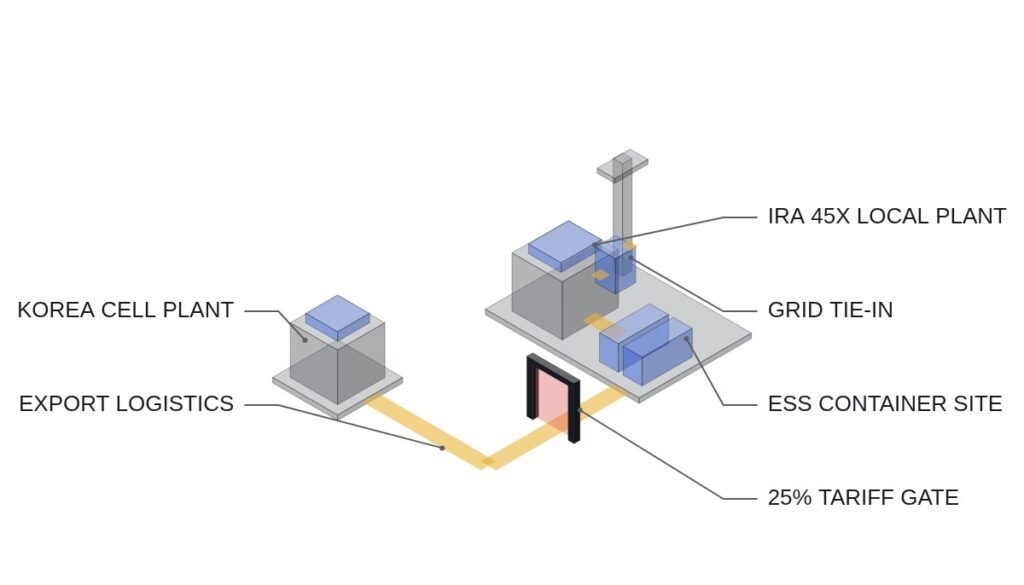
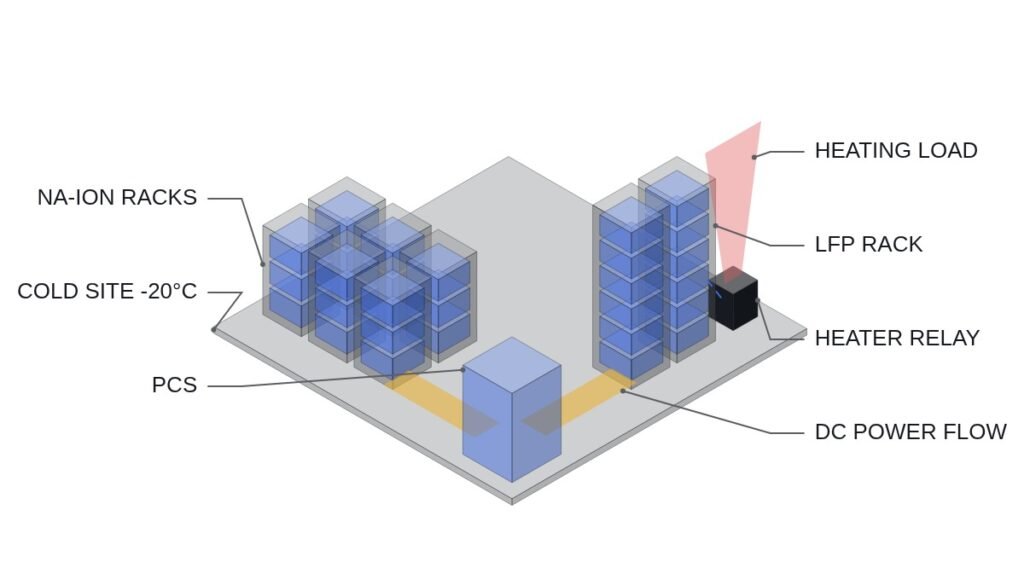
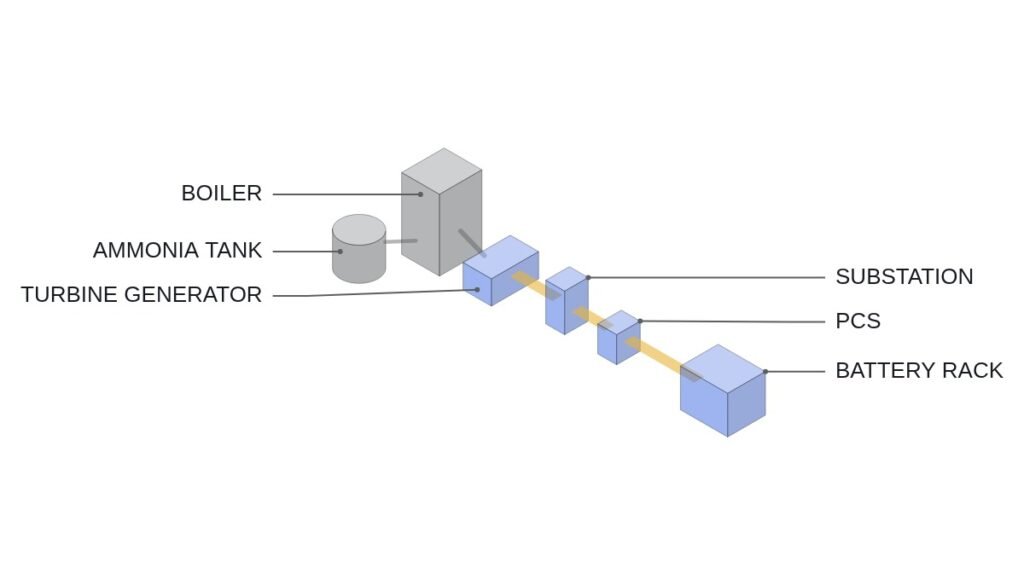
Conclusion. The EU wants to strengthen cooperation with Korea’s three battery makers in order to break China’s battery dominance and diversify its supply chain. The Korean three are in a favorable position when three things line up at once: LFP capability, ESS volume, and production bases inside Europe. Conversely, depending on which direction the IAA legislation is finalized in, this advantage could flip (Global Economic, 2026.09.02).
What happened
The report said the EU is moving to “strengthen its alliance” with LG Energy Solution, SK On and Samsung SDI. The axis is supply chain diversification built on LFP, ESS and European production bases. The IAA legislation was singled out as the variable for recovering market share. The detailed provisions of the IAA are not in the report summary provided, so they are an item to verify.
Layer comparison: where the advantage is decided
| Layer | Chinese suppliers | Korean three | Deciding condition |
|---|---|---|---|
| Policy | Target of dominance curbs | Target of closer cooperation | Direction of IAA legislation |
| Production base | No report on European bases | Has European production bases (reported) | Strength of local production requirement |
| Product (chemistry) | LFP-focused (general perception) | Ramping up LFP (reported) | LFP cost and volume gap |
| Application | No report on ESS volume | Includes ESS (reported) | Pace of ESS demand growth |
What this table says is that the Korean three’s advantage is created in the policy and production-base layers more than in the product itself. The product layer (LFP) reads as still being in the catch-up stage.
Implications from an energy systems perspective
In the European power system, ESS is the equipment that absorbs the variability of renewable energy. Where those ESS cells are sourced from is the real substance of this cooperation. Battery chemistry selection is no longer just a performance question; it has become a procurement policy question. System designers are safer preparing an LFP-based reference specification while not locking in the chemistry until procurement conditions are settled.
Why chemistry should be locked in late in ESS procurement
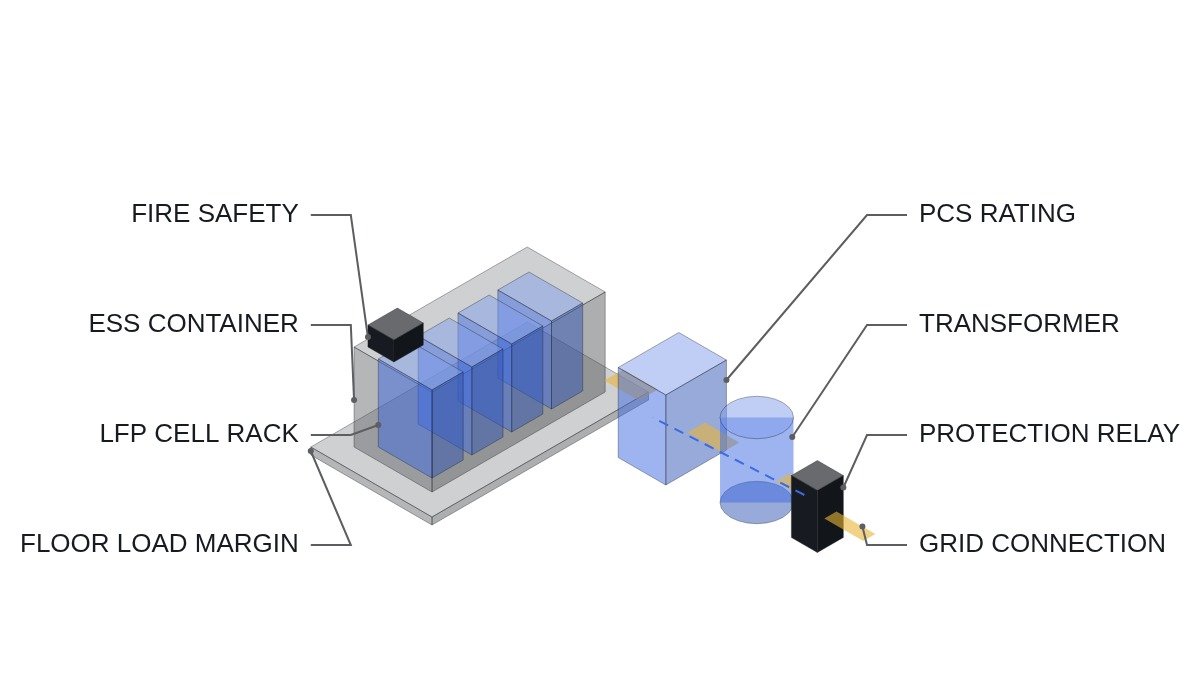
In an ESS project, the moment you choose a cell, the design that follows gets tied down all at once. Change the cell chemistry and the voltage window changes; change the voltage window and the PCS rating and protection settings change, and the rack configuration and fire-safety design basis move with them. If the chemistry is fixed before procurement policy is settled, then when the policy changes, the scope you have to roll back does not stop at the cell order.
| Decision order | Fix first | Can be fixed later |
|---|---|---|
| Grid conditions | Connection capacity, protection coordination requirements | — |
| System specification | Rated power, storage duration, fire-safety rating | — |
| Cell specification | — | Chemistry, cell supplier |
What this table says is to push the items exposed to procurement policy variables to the last stage of design. Grid conditions and system specifications can be settled first regardless of policy, and the chemistry can be chosen later within that envelope without the design collapsing. Proceed in the opposite order and any policy change turns straight into a redesign.
What it means to use LFP as the reference specification
Preparing specifications on an LFP basis does not mean deciding to use LFP; it means building a design that holds up under LFP’s conditions too. LFP requires more volume and weight for the same storage capacity, so if site area, floor loading and rack layout are set on an LFP basis, there is margin left over when you switch to another chemistry. Conversely, if you design around a higher energy density chemistry, you run short of space when switching to LFP.
In other words, a reference specification is more resilient to procurement variables when it is set not to the best-performing option but to the most constrained option. This principle holds whichever direction the policy is finalized in.
Specific margins for site area and floor loading vary with project conditions, so this article does not give figures. Item to verify.
How to build policy variables into the design
- Write required performance into the specification instead of a chemistry — specifying storage duration, cycle life and fire-safety rating keeps a supplier change from spreading into a redesign.
- Size space and loading for the more constrained option — reducing later is easy; increasing is hard.
- Settle protection coordination from grid conditions first — the grid’s requirements do not change when the cell does.
- State the procurement decision date in the schedule — how long the chemistry can be left open is exactly the slack available to absorb policy variables.
Of the four items, the last has the biggest effect on the schedule. The longer the chemistry can be left open, the longer you can wait for policy to be finalized; the shorter it is, the more you are forced to decide before it is. Setting the IAA legislative timeline side by side with a project’s cell ordering date makes it possible to judge at a relatively early stage whether this cooperation will turn into actual volume.
Boundary conditions: where the advantage flips
- If the IAA legislation sets weak local production requirements, the advantage in the production-base layer shrinks.
- If the LFP cost gap persists, market share recovery in the product layer is delayed even with a policy advantage.
- If ESS demand slows, the diversification effect along the ESS axis becomes smaller.
Of these three conditions, the single criterion that decides how durable this cooperation will be is the strength of the IAA’s local production requirement. Even if the policy, production-base and product layers are all favorable at once, it is this requirement that ultimately locks that advantage into law. If the requirement is strong, the production-base advantage holds; if it is weak, a policy advantage alone will not prevent a delay in regaining market share.