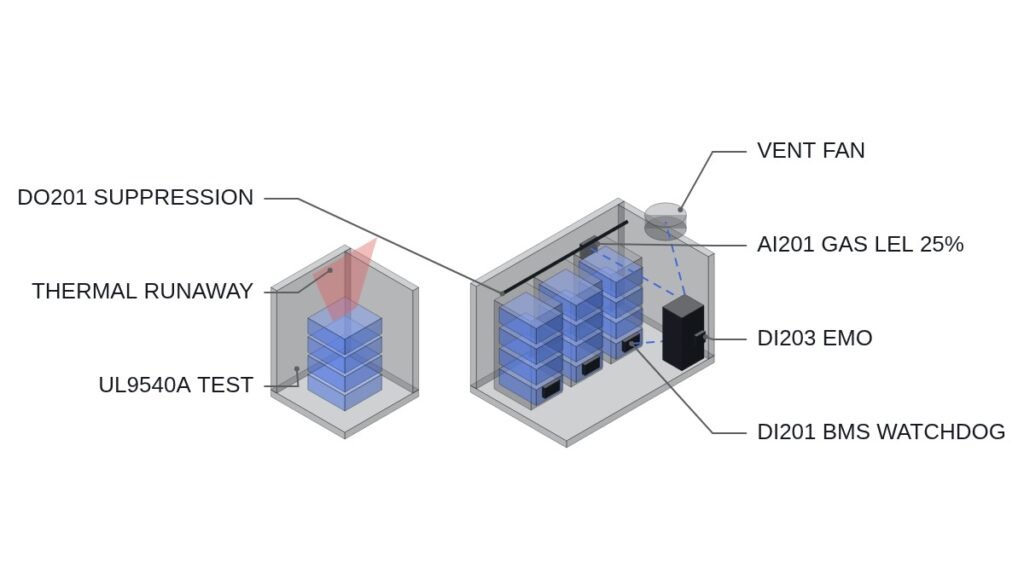
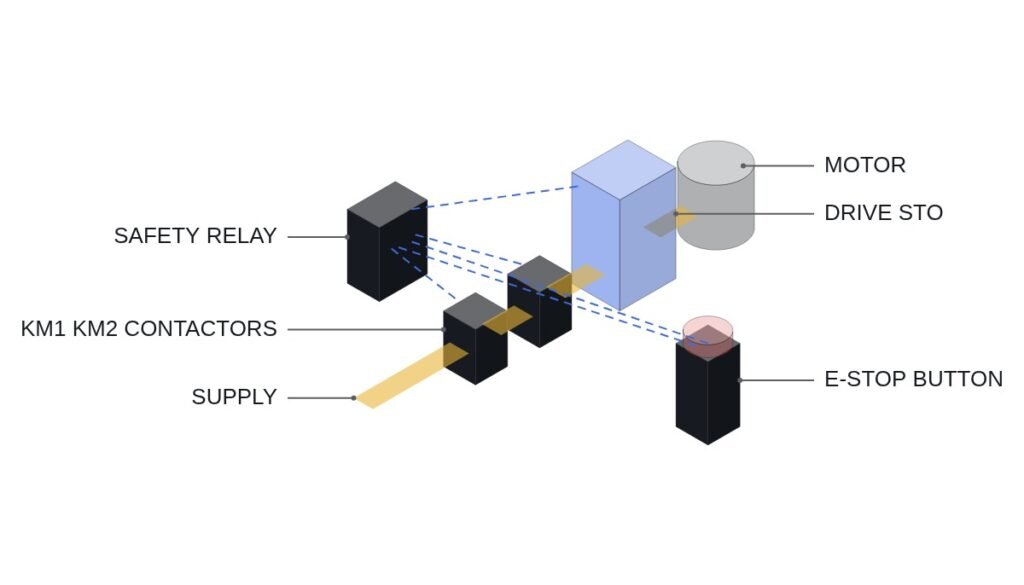
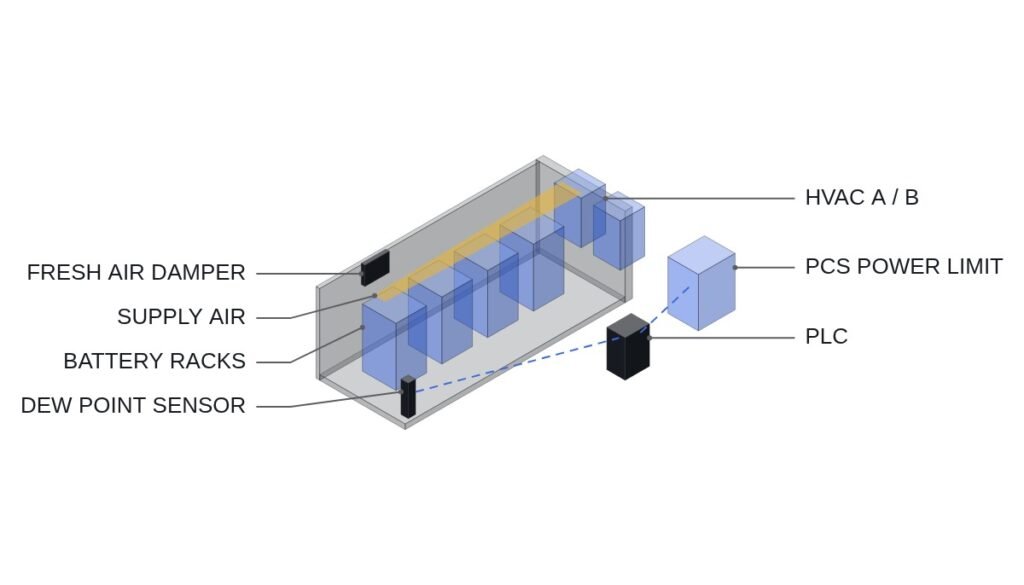
Starting with the conclusion. UL9540A Level 4 compliance retrofits are close to mandatory for ESS installed indoors or adjacent to an occupied space, with multiple racks densely arrayed. Conversely, for a small, single-rack outdoor site with sufficient outdoor setback distance, meeting the existing Level 1-3 requirements alone may satisfy the Authority Having Jurisdiction (AHJ). UL9540A Edition 6, issued March 13, 2026, and the NFPA 855 2026 revision reconfirm that it is not cell chemistry but installation method and setback conditions that determine the test tier.
1. Background — UL9540A Edition 6 and the Large-Scale Fire Test (LSFT)
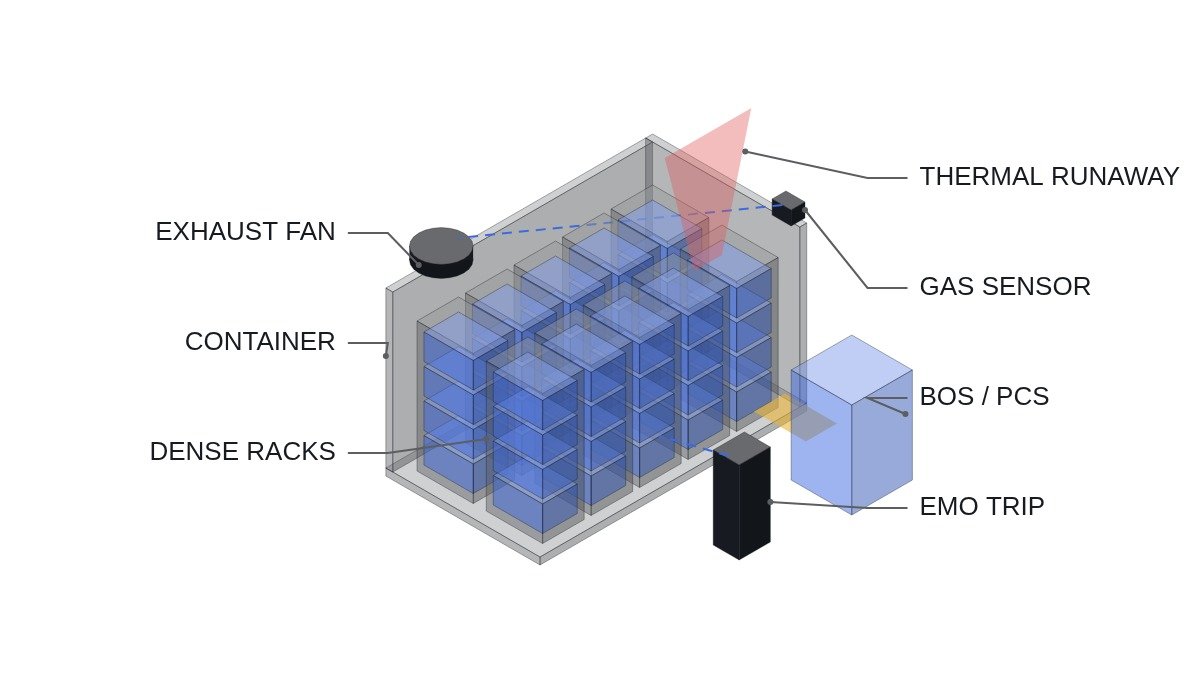
UL9540A Edition 6 was issued on March 13, 2026, raising by one level the method for evaluating thermal runaway, fire propagation, and explosion risk in battery energy storage systems (BESS). The newly introduced Level 4 test targets not the interior of the battery but “the entire ESS as actually installed” — reproducing and verifying real accident scenarios across the container or the entire indoor installation space, the battery and BOS (Balance of System), and gas, fire, and pressure buildup and propagation. At the same time, the NFPA 855 2026 revision made the Large-Scale Fire Test (LSFT) mandatory.
Reading this trend narrowly as a cell-chemistry issue leads to the wrong judgment. The primary variable that determines the test tier is not chemistry but the relationship between installation method (indoor/outdoor), setback distance, and adjacent facilities.
2. Where It’s Advantageous — Indoor Installation, Adjacency to Occupied Facilities, Dense Arrays
Current condition: sites such as an ESS room attached to a data center, or an electrical room in a commercial building basement — where dense arrays of multiple racks sit right next to an occupied space with only a wall between them — carry a high potential for loss of life in a fire event.
Applied change: applying Level 4-compliant equipment reworks discharge, extinguishing, and compartmentalization design based on system-level empirical data, giving a basis to satisfy the relevant AHJ and insurer requirements upfront at the permitting stage. Reflecting this from the early design stage costs less than a retrofit after completion.
Connecting logic: at indoor, densely arrayed sites, Level 4 test data is increasingly becoming a prerequisite for both insurance enrollment and fire-department permitting.
3. Where It’s Disadvantageous — Outdoor, Adequate Setback, Single Small Rack
The opposite condition is also clear. A site with a wide footprint securing sufficient outdoor setback distance, installing only a single rack or a small number of racks, has inherently low potential for fire propagation to adjacent structures.
If a full Level 4 retrofit is pushed through at such a site, the change is this: testing and certification cost and schedule increase, while the risk-reduction benefit is limited. Many jurisdictions allow permitting based on the existing Level 1-3 test record alone, as long as setback-distance criteria are met.
However, this judgment differs by jurisdiction. The final requirement must always be confirmed against the local AHJ and insurance regulations — it is not a matter to be decided by this article’s classification alone.
4. Comparison Table — Scope by Test Tier
| Category | Level 1-3 (Cell/Module/Unit) | Level 4 (Entire Installed System) |
|---|---|---|
| Test target | Cell, module, rack unit | Container/indoor installation space + entire BOS |
| Evaluation items | Individual cell thermal-runaway propagation | Gas/fire/pressure buildup and propagation |
| Basis for application | Existing UL9540A edition record sufficient | NFPA 855 2026 revision LSFT mandate |
| Primary use cases | Outdoor setback installation, small single rack | Indoor installation, adjacency to occupied facility, dense array |
The row worth attention here is ‘basis for application.’ Since Level 4 is a new requirement, equipment built only to the existing design standard may need a partial retrofit. For a project already in progress or in planning, the applicable edition must first be confirmed with the relevant AHJ before applying for a permit.
5. Pre-Permit Checklist
- [ ] Confirm whether the installation location is indoor or outdoor, and the setback distance (m) from the nearest occupied space
- [ ] Confirm whether the relevant AHJ requires a specific UL9540A edition (before/after Edition 6) as the applicable standard
- [ ] Confirm whether the NFPA 855 2026 revision’s LSFT mandate clause applies to that jurisdiction
- [ ] Confirm whether the discharge/extinguishing equipment was designed to reflect the Level 4 test scenario (including gas/pressure buildup)
- [ ] Confirm whether the thermal-runaway detection threshold values (temperature/voltage/gas sensors) and the trip sequence are built as hardwired interlocks — check that a software judgment alone does not substitute for the EMO/discharge circuit
- [ ] Confirm in advance whether insurer underwriting requirements include Level 4 test data
6. Detection–Trip Interlock Logic Example (Conceptual)
Below is a conceptual example of the response sequence logic for thermal-runaway detection. The safety interlock always confirms the hardwired path first, ahead of the software judgment.
# ESS Thermal-Runaway Detection–Trip Sequence (Conceptual Example)
# I/O MAP
# AI001 : Rack internal temperature sensor (Celsius, ms-scale sampling)
# AI002 : Gas sensor (H2/CO) concentration (ppm)
# DI001 : Cell overvoltage signal (BMS contact output)
# DO001 : Exhaust fan forced-run relay
# DO002 : Fire-suppression equipment activation relay
# DO003 : EMO hardwired trip signal (SW override prohibited — hardwired interlock maintained)

TEMP_THRESHOLD = 60  # Celsius, primary warning threshold (example — must be recalibrated to actual measured baseline)
GAS_THRESHOLD = 100   # ppm, gas detection threshold (example)

def evaluate_interlock(temp, gas_ppm, cell_fault):
    # Safety interlock checked first — hardwired trip immediately if cell overvoltage AND gas detection occur simultaneously
    if cell_fault and gas_ppm > GAS_THRESHOLD:
        return "DO003_HARDWIRE_TRIP"  # EMO circuit, not substituted by software

    # Primary warning stage — forced exhaust activation
    if temp > TEMP_THRESHOLD:
        return "DO001_EXHAUST_ON"

    return "NORMAL"
This logic is for conceptual explanation only. Actual threshold values and interlock conditions vary by Level 4 test results and field sensor specifications, so waveform analysis and field measurement must always be performed before application.
7. Boundary Condition and Selection Criteria
The point where this judgment flips is clear. At a small, single-rack outdoor site with sufficient outdoor setback distance, compliance with the existing Level 1-3 tier can be more cost-rational than a full Level 4 retrofit. Level 4 should be treated as the priority review target only for indoor installations or sites densely arrayed adjacent to an occupied facility. However, the final requirement is the relevant AHJ and insurance regulations, and this article’s classification is a reference guide only — it should not be taken as the basis for a definitive judgment.
References
- UL9540A Edition 6, Level 4 testing targeting the entire ESS system — Intertek
- ANSI/CAN/UL 9540A:2026 standard information — ANSI Webstore
- Overview of the UL 9540A Level 4 test method — Sunlith Energy