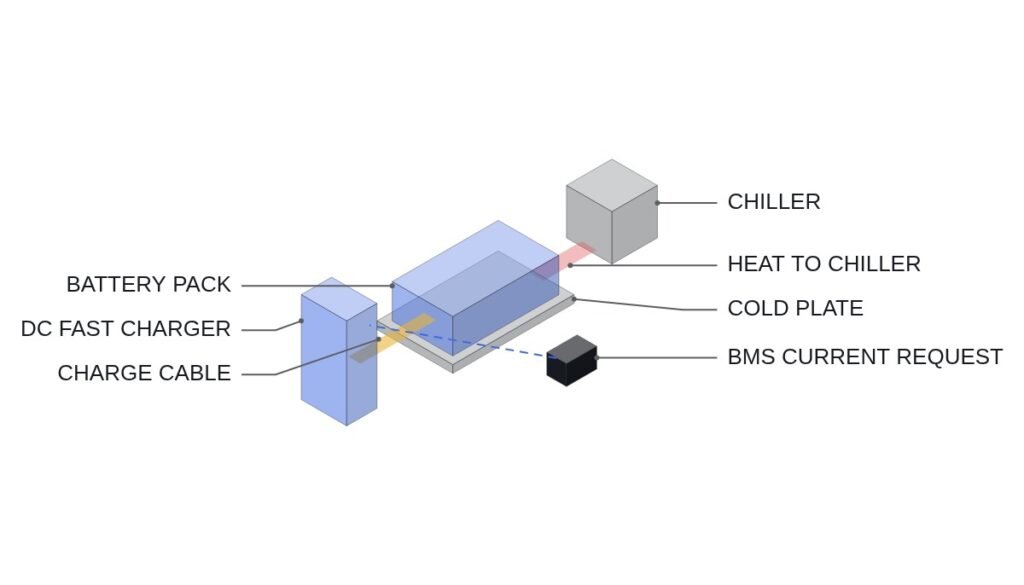
Fast-charge C-rate: how high can it go before cells degrade
The fast-charge C-rate limit is a function of cell temperature and SOC. Preheating and a limited charge window are what allow high C-rates.
The fast-charge C-rate limit is a function of cell temperature and SOC. Preheating and a limited charge window are what allow high C-rates.
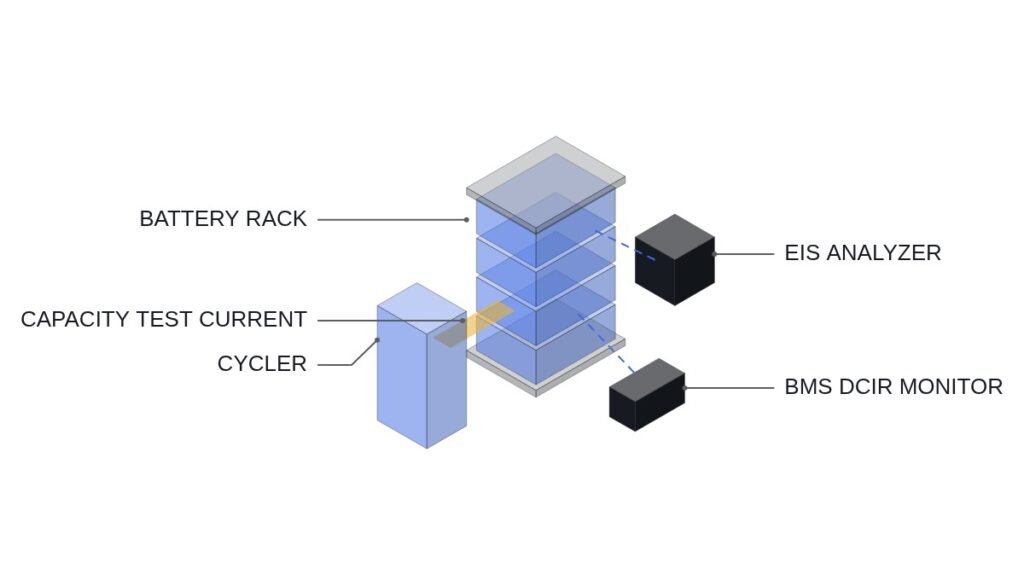
Capacity tests give the reference, DCIR tracks in-service trends, EIS diagnoses causes. First decide whether capacity or resistance is the bottleneck.
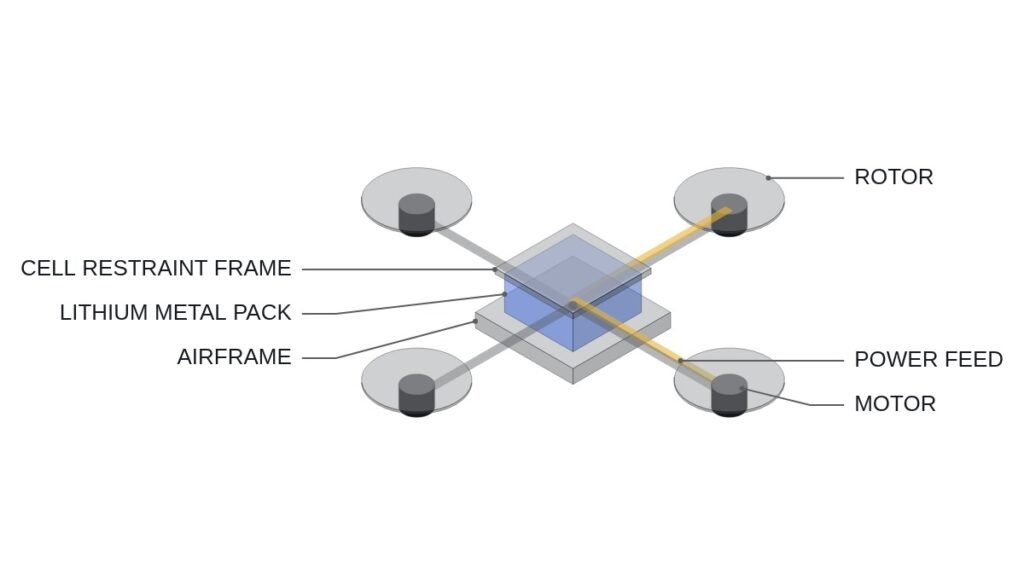
Lithium-metal and lithium-sulfur gain Wh/kg but give up life and volume. Aircraft, where pack-level weight gain beats life cost, come first.
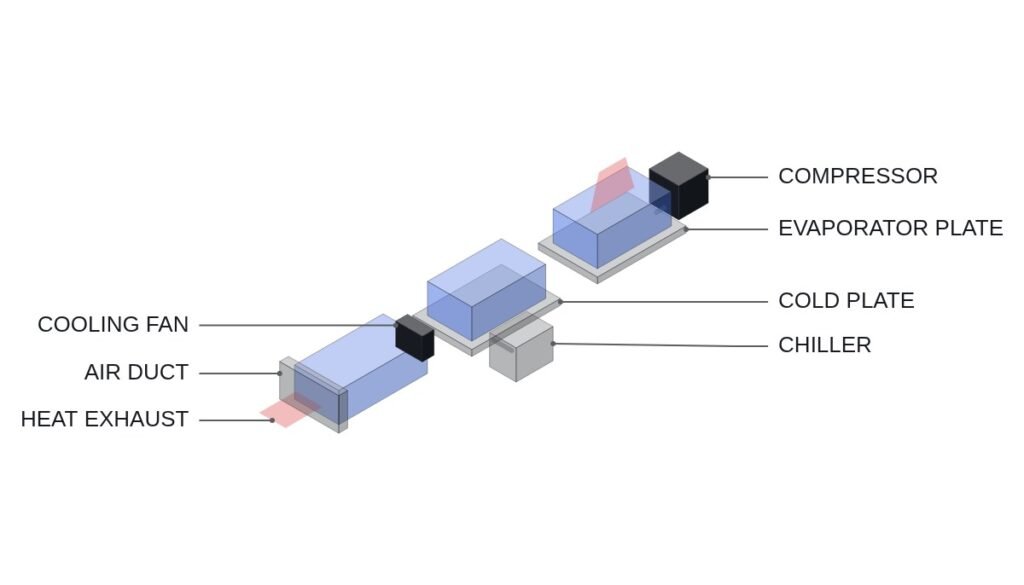
Choose thermal management by cell heat and allowable cell-to-cell spread: airflow limits, liquid preheating, HVAC sharing for direct cooling.

How the two cathode chemistries, NCM (nickel-cobalt-manganese) and LFP (lithium iron phosphate), split EV driving range, cycle life, and safety.
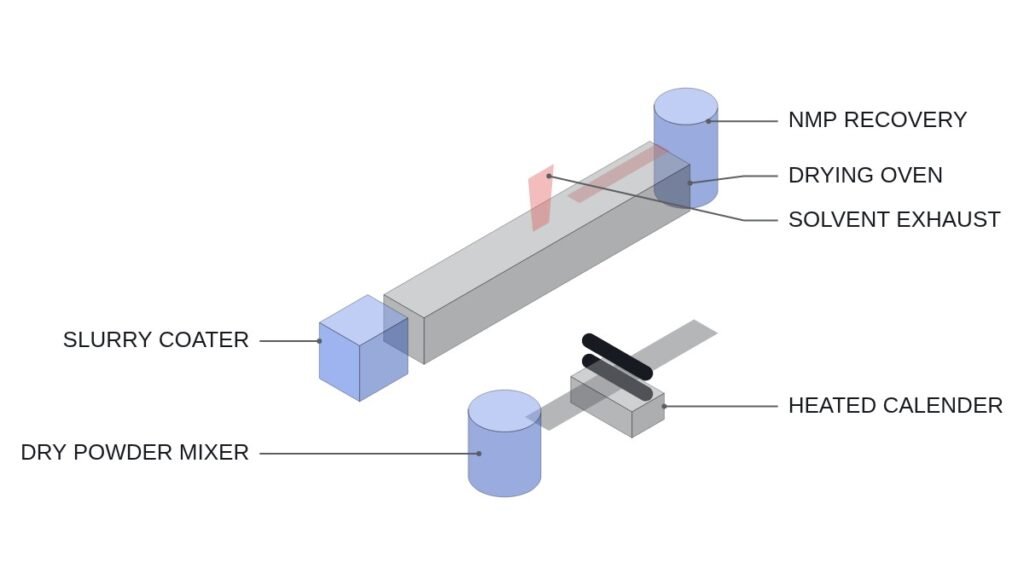
Wet-process energy sits in drying ovens and NMP recovery. Dry processing removes both, wins on thick cathodes, and shifts explosion protection to dust.
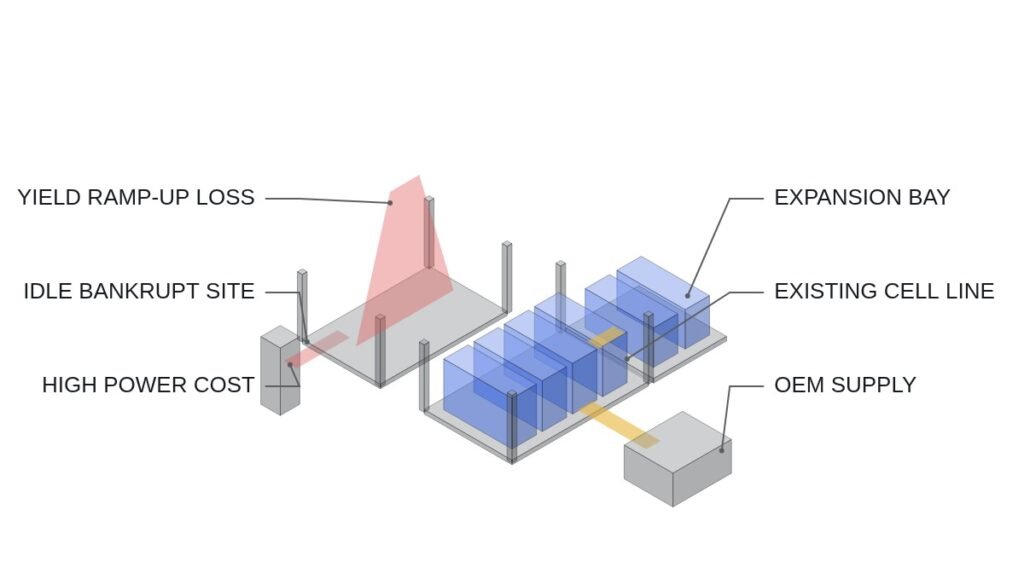
As Varta follows Northvolt into insolvency, a comparison of expansion timing in Europe for Korean cell makers based on whether they are already present.
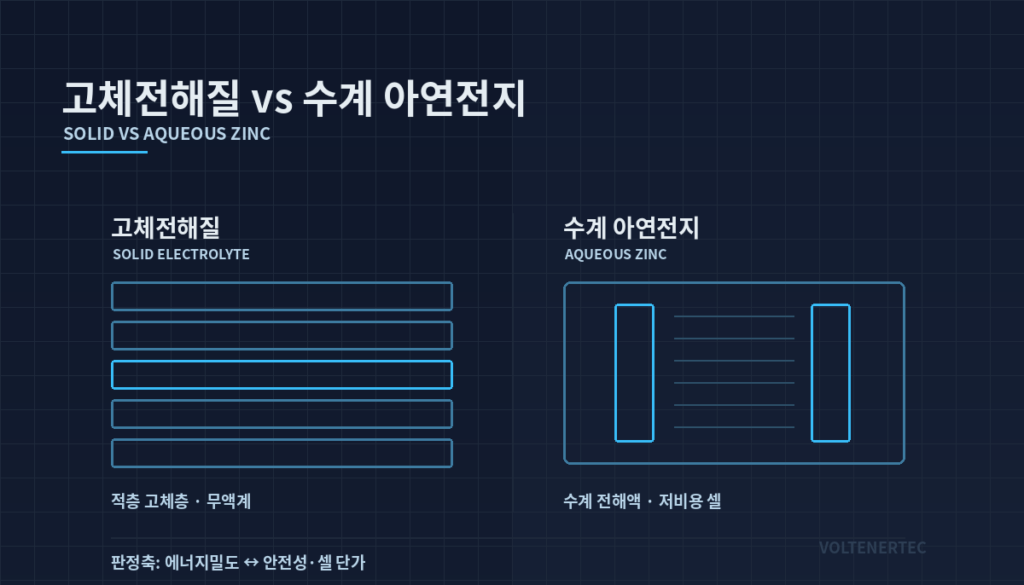
A KRW 23 billion Series C for solid electrolytes and a KRW 22 billion Series A for aqueous zinc batteries: both next-generation, but aimed at different positions.
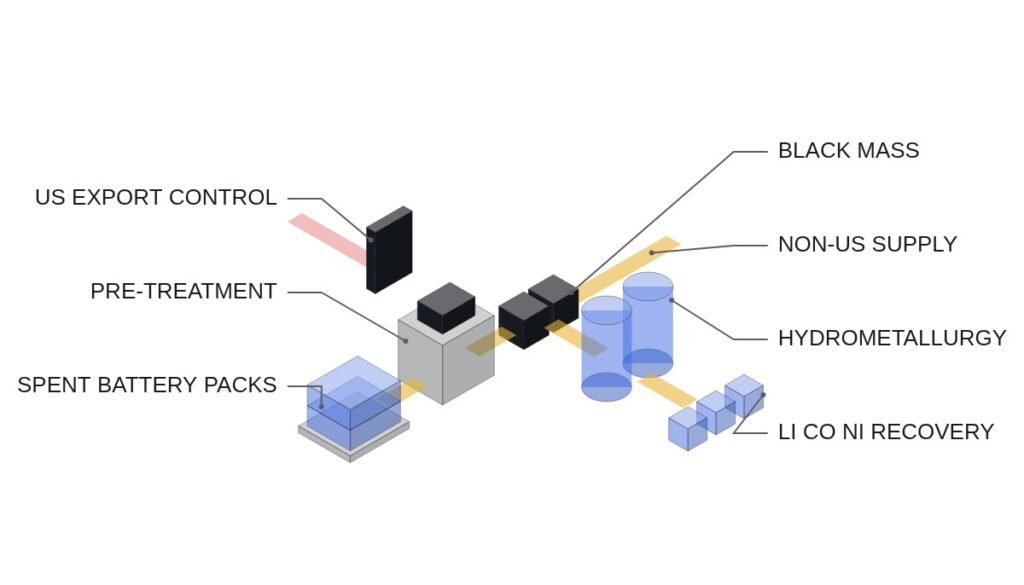
With the US requiring black mass to be sold to domestic buyers first from 27 August 2026, is domestic in-house recycling or supply route diversification the better choice?
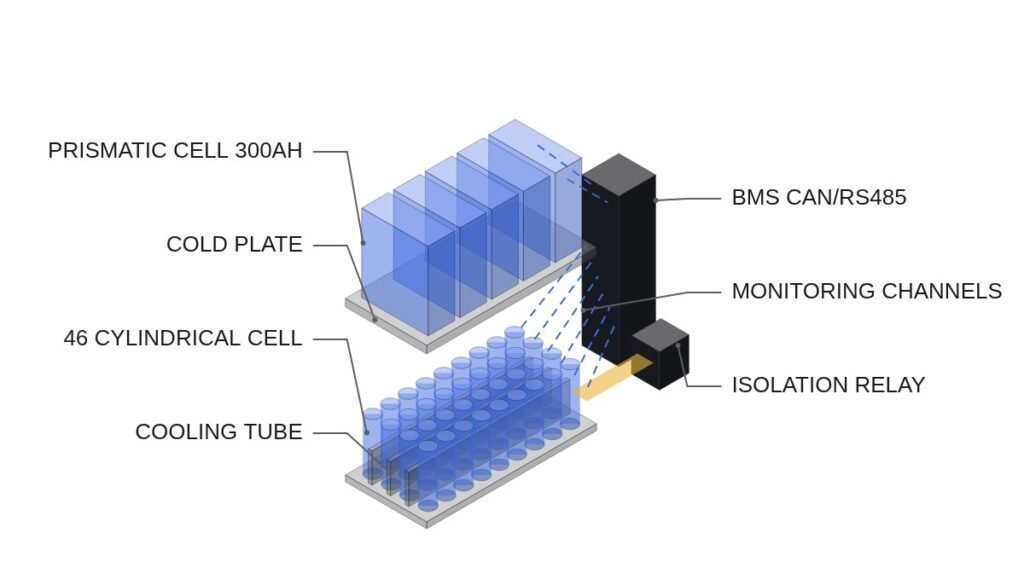
The split into 46-series cylindrical cells for EVs and prismatic cells for ESS, compared from the standpoint of BMS communication load and cooling interface rather than mechanical strength.